




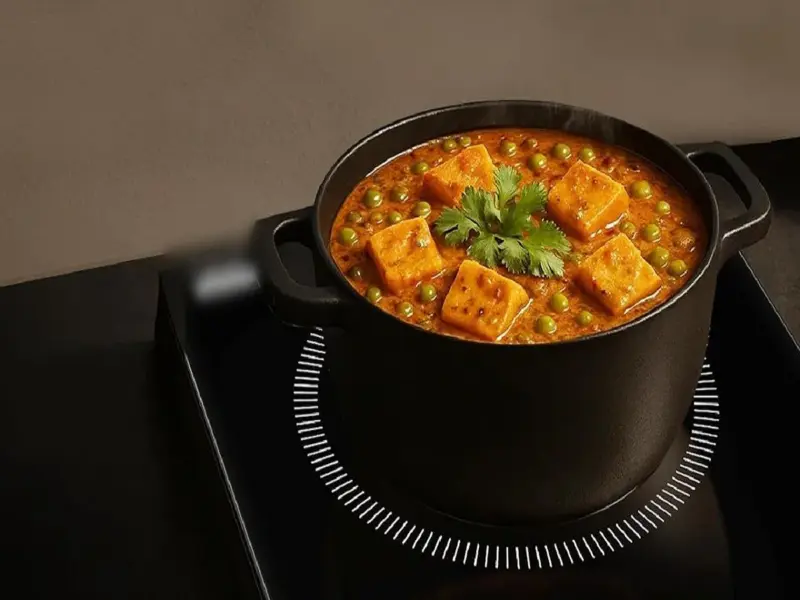

Cooking without a visible flame may sound unusual, but modern kitchens are increasingly adopting induction cooktops for their efficiency and safety.
Unlike traditional gas stoves, induction technology uses principles of physics-specifically Electromagnetic Induction-to generate heat directly inside cookware.
If you are planning to switch to an induction cooktop, understanding how it works can help you use it more effectively.
What Is an Induction Cooktop?
An induction cooktop is an electric cooking appliance with a smooth ceramic or glass surface. Instead of producing heat through flames or heating elements, it relies on electromagnetic energy.
One important condition: it only works with cookware made of magnetic materials, such as:
- Cast iron
- Stainless steel
Materials like aluminum, copper, or glass do not work unless they have a magnetic base.
How Does an Induction Cooktop Work?
The working process can be understood in three simple steps:
1. Electric Current Flows Through a Coil
When you turn on the induction cooktop, electricity passes through a copper coil placed beneath the glass surface.
2. Magnetic Field Is Generated
This flow of current creates a rapidly changing magnetic field around the coil. This is where Electromagnetic Induction comes into action.
3. Heat Is Produced Inside the Vessel
When you place a compatible metal vessel on the cooktop, the magnetic field induces tiny electric currents (called eddy currents) in the base of the vessel. Due to the metal's resistance, these currents generate heat directly in the cookware.
This means:
- The vessel heats up, not the cooktop
- Food cooks faster and more efficiently
Why Doesn't the Cooktop Get Hot?
Since heat is generated inside the vessel itself, the cooktop surface remains relatively cool. It may get slightly warm due to contact with the hot pan, but it does not heat up like a traditional stove.
Advantages of Induction Cooking
High Efficiency and Speed
Induction cooktops are highly efficient because energy is transferred directly to the cookware. Very little heat is wasted, resulting in faster cooking.
Better Safety
Without an open flame, the risk of fire accidents is reduced. The surface also remains cooler, lowering the chances of burns.
Precise Temperature Control
Heat levels can be adjusted instantly, allowing better control over cooking compared to gas stoves.
Energy Saving
Since there is minimal heat loss, induction cooking consumes less energy over time.