
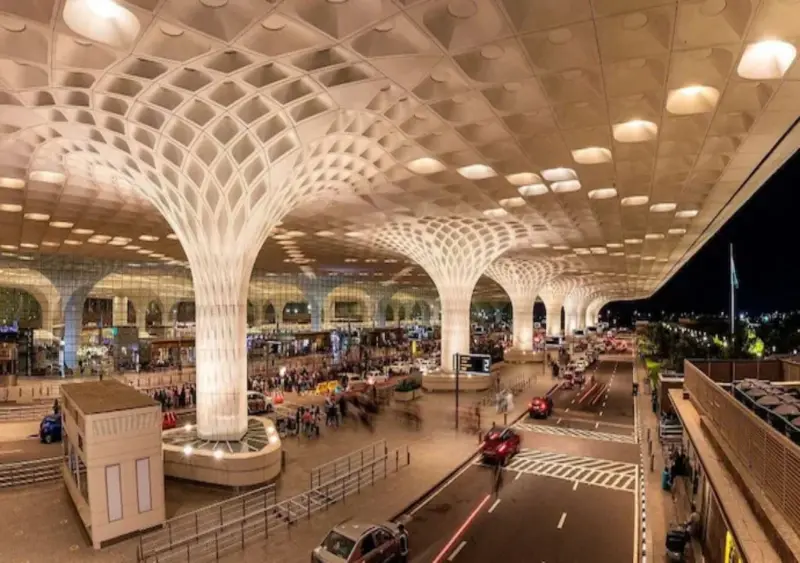

Mumbai: Travellers passing through Chhatrapati Shivaji Maharaj International Airport may no longer need to scramble for last-minute essentials or pay premium prices at airport stores.
Quick commerce platform Blinkit has introduced an in-terminal delivery service at Terminal 2, marking a first-of-its-kind initiative in India's airport ecosystem.
Launched in partnership with Adani Airport Holdings Limited, the service allows passengers to order products through the Blinkit app and receive them within minutes anywhere inside the departure area — including boarding gates, lounges, food courts, and select partner outlets.
The idea behind the service is simple: reduce the friction associated with airport shopping. Instead of navigating crowded terminals or settling for limited retail options, travellers can now browse and order items directly from their smartphones.
Once an order is placed, trained on-ground delivery staff ensure it reaches the passenger within the terminal. These personnel operate under strict airport security protocols, ensuring that the delivery process does not disrupt passenger flow or compromise safety.
This move reflects a growing trend where convenience and speed are becoming central to passenger expectations, especially in high-pressure environments like airports.
The offering includes a mix of practical and impulse purchases tailored to travel needs. Passengers can choose from travel accessories, electronic items such as chargers, packaged snacks, books, and personal care products.
Beverages, including water and juices, are also available. However, these are sourced from approved in-terminal inventory to comply with aviation security regulations.
The curated catalogue ensures that products meet both convenience and compliance requirements, making the service seamless for users.
For Blinkit, the initiative is not just about novelty but about expanding its use cases beyond homes and offices. Airports present a unique opportunity — passengers are often short on time and more willing to pay for convenience.
By tapping into this high-intent environment, the company aims to deepen user engagement and position itself as a go-to solution for instant needs across varied settings.
Industry observers note that such integrations could redefine how quick commerce platforms operate, moving from neighbourhood deliveries to high-footfall transit hubs.
For Adani Airport Holdings Limited, which operates multiple airports across India, the move aligns with a broader strategy to enhance non-aeronautical revenue streams. These include earnings from retail, services, and passenger experience rather than core aviation operations.
Digital innovations like Blinkit's in-terminal delivery service could become key differentiators as airports increasingly compete on experience rather than just infrastructure.
Enhancing passenger convenience while generating additional revenue streams is likely to remain a priority for airport operators in the coming years.
While the concept is being tested at Mumbai's Terminal 2, its future expansion will depend on execution and scalability. Factors such as operational efficiency, security compliance, and user adoption will determine whether similar services are rolled out at other major airports in India.
If successful, the model could pave the way for a new standard in airport retail, blending physical infrastructure with digital convenience.
Blinkit's entry into airport terminals signals a shift in how travellers access everyday essentials during their journeys. By combining speed, accessibility, and technology, the service aims to simplify the airport experience.
If the pilot at Mumbai proves successful, quick commerce inside airports may soon become as commonplace as it is in urban neighbourhoods.