




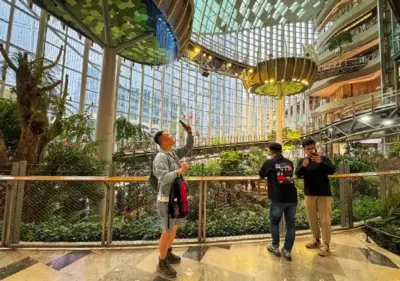

Shopping malls across China are undergoing a dramatic transformation as developers increasingly combine retail spaces with parks, gardens, riverside promenades and leisure zones to meet changing consumer expectations.
Industry experts say the shift reflects a growing preference for experiences over traditional shopping, with visitors seeking places to socialise, exercise, dine and spend quality time with family and friends.
Beyond shopping and retail
The rise of e-commerce has prompted property developers to rethink the role of physical retail spaces. Rather than competing directly with online platforms, many new developments are focusing on experiences that cannot be replicated digitally.
Open-air layouts, landscaped environments and community-oriented spaces are becoming central features of modern commercial projects. These environments also support entertainment events, cultural programmes and nighttime activities that help attract visitors throughout the day.
According to industry observers, consumers increasingly view shopping centres as lifestyle destinations rather than places solely for purchasing goods.
Large-scale investments drive the trend
One of the most notable projects is being developed by Swire Properties in Beijing. The company is investing approximately 23 billion yuan in its Taikoo Place Beijing development, a mixed-use project featuring office towers, retail outlets, hospitality facilities and extensive green spaces alongside a riverfront setting.
Similar park-style commercial developments have emerged in Shanghai, Guangzhou, Chongqing and Chengdu. Some projects incorporate features such as waterfalls, tropical landscaping, elevated walkways and immersive outdoor environments designed to encourage longer visits.
Focus on experiences and community
Retail experts say today’s consumers increasingly value unique and memorable experiences. As a result, brands are investing in interactive spaces and destination-driven concepts that strengthen customer engagement and loyalty.
The trend has also received policy support from Chinese authorities, who have encouraged the development of smart commercial districts and immersive retail environments to stimulate domestic consumption.
Research suggests that park-style commercial projects have expanded rapidly in recent years, reflecting a broader shift towards placemaking and community-focused urban development.
Experts believe the future of retail lies in creating destinations that people want to visit even when they have no intention of shopping, transforming malls into vibrant public spaces that blend commerce, recreation and nature.