

Mangaluru: The Union Ministry of Environment, Forest and Climate Change has approved Karnataka's Coastal Zone Management Plan (CZMP), following recommendations from the National Coastal Zone Management Authority.
While the decision is expected to give a significant boost to tourism in coastal Karnataka, stakeholders say persistent regulatory challenges and lack of clarity in Coastal Regulation Zone (CRZ) rules continue to hinder new investments.
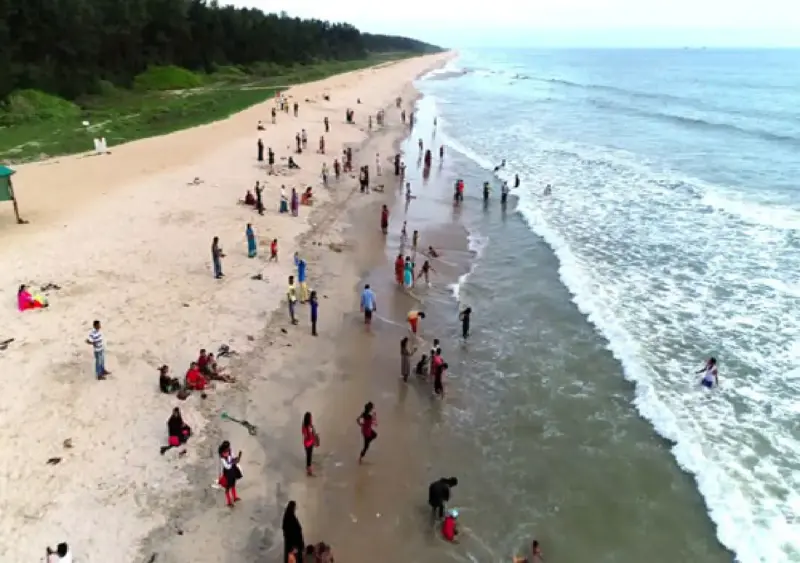
The approval of the CZMP is seen as a major step toward unlocking tourism potential across the coastal districts of Uttara Kannada, Udupi, and Dakshina Kannada. Officials have identified 92 beaches for tourism development, which could transform the region into a major travel destination.
Tourism development is expected to generate both direct and indirect employment, create livelihood opportunities for local communities, and contribute to the region's socio-economic growth. With structured planning, the sector could attract investments worth several crore rupees, benefiting small businesses, homestays, and local service providers.
Authorities believe that integrating tourism projects into the CZMP framework will enable systematic and sustainable development of coastal areas while balancing environmental concerns.
Despite the approval, CRZ regulations remain a major hurdle for entrepreneurs and tourism promoters. Applications for CRZ clearance are currently being processed under the 2019 notification, which lays down strict guidelines for permissible activities in coastal areas.
As per the CZMP maps prepared for Karnataka, approvals can be obtained either from the Karnataka State Coastal Zone Management Authority or the tourism department. However, stakeholders report that only conditional permissions are being granted, leading to delays and uncertainty.
The coastal zones are classified into CRZ-1A, CRZ-1B, CRZ-2, and CRZ-3 categories, each with its own set of restrictions. Development activities are permitted strictly within these guidelines, limiting the scope for large-scale tourism infrastructure in many areas.
In CRZ-1A zones, which are ecologically sensitive areas such as mangroves, only minimal and eco-friendly activities are allowed. These include mangrove walkways, wooden huts, and natural pathways, ensuring minimal environmental impact.
CRZ-2 zones, which include developed urban coastal areas, allow hotels and resorts, but only in specifically earmarked tourism zones as per Annexure-3 guidelines. However, identifying these designated areas has proven to be a complex and time-consuming process.
Temporary tourism facilities such as beach huts, toilets, changing rooms, shower panels, and seating arrangements are permitted under strict conditions. These structures must be located at least 10 metres away from the high tide line and can only be set up in approved zones.
Similar restrictions apply to CRZ-3 areas, which include relatively undisturbed rural coastal stretches. Activities here are tightly regulated to prevent environmental degradation.
The approval process itself remains a key concern. For activities falling under CRZ-1A, 1B, 4A, and 4B categories, clearance must be obtained from the central government. Meanwhile, projects in CRZ-2 and CRZ-3 zones require a no-objection certificate (NOC) from the Karnataka Coastal Zone Management Authority, which must be secured through an online process.
Officials emphasise that only approved activities in designated locations will be permitted, and any violations will attract strict action, including notices and penalties.
Tourism promoter Yatheesh Baikampady highlighted the lack of clarity in implementation despite the existence of guidelines. He noted that the 2019 notification was due for review in 2024, and a revised framework was expected by now.
'We are already in 2026. Without updated rules and clearer guidelines, investors may hesitate, and several projects could slip away,' he said.
Industry stakeholders argue that while environmental protection is essential, clearer and more streamlined regulations are necessary to encourage responsible tourism development.
The approval of Karnataka's Coastal Zone Management Plan marks a significant milestone in promoting coastal tourism. However, unless regulatory ambiguities are addressed and approval processes simplified, the full potential of the sector may remain unrealised. Striking a balance between environmental conservation and economic growth will be crucial for the sustainable development of the state's coastline.