
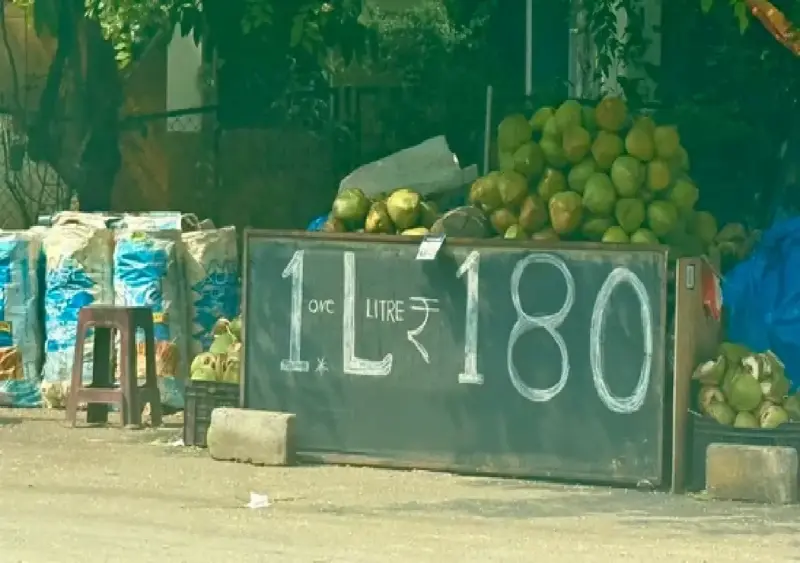

Bengaluru: A simple roadside coconut stall in Bengaluru has sparked a lively debate on social media after a photo showed coconut water being sold by the litre instead of per piece — an uncommon practice in most parts of India.
The image, shared on X by user Ritu Joon, displayed a chalkboard at the stall advertising the price as '1 litre ₹180.' The unusual pricing format quickly caught the attention of netizens, triggering a wide range of reactions online.
In most Indian cities, coconut water is typically sold per coconut, with prices varying based on size and season. However, the Bengaluru stall's approach of selling it by volume stood out to many.
Sharing the image, the user remarked that she had only seen coconut water sold by the litre in Bengaluru, calling it a 'peak Bengaluru' moment. The post soon went viral, drawing comments from users across the country.
The pricing of ₹180 per litre became a major talking point, with many users comparing it to rates in their hometowns. Several commenters felt the price was steep, noting that coconut water is often available for around ₹40 to ₹60 per coconut in smaller towns.
Others echoed similar sentiments, calling the pricing 'expensive' and 'typical of Bengaluru,' a city often associated with higher living costs.
At the same time, some users pointed out that selling coconut water by volume is not entirely unique. A few mentioned that similar practices exist in cities like Hyderabad, where vendors sometimes offer both per-coconut and per-litre options.
Beyond pricing, the concept itself raised practical questions. Many users were curious about how vendors measure coconut water in litres, given that it is naturally contained within individual coconuts.
Responding to these queries, the original poster clarified that customers can bring their own bottles — such as a 1-litre container — which the vendor fills accordingly. This explanation added another layer of intrigue to the discussion.
The viral post highlights how urban markets like Bengaluru often experiment with unconventional selling methods to cater to diverse customer preferences. Selling by volume could appeal to customers looking for larger quantities or more standardised pricing.
At the same time, it also reflects the premium pricing trends seen in metropolitan cities, where convenience and novelty can influence cost.
The discussion continues to gain traction online, with users debating whether the pricing is justified and whether such practices could become more common in other cities.
While some see it as innovative, others remain sceptical, preferring the traditional method of buying coconut water directly from the fruit.
What began as a simple photo of a roadside stall has turned into a broader conversation about pricing, urban lifestyles, and changing consumer habits. Whether viewed as quirky or costly, the litre-based coconut water sale has certainly captured the internet's attention and added another 'only in Bengaluru' moment to the city's reputation.