




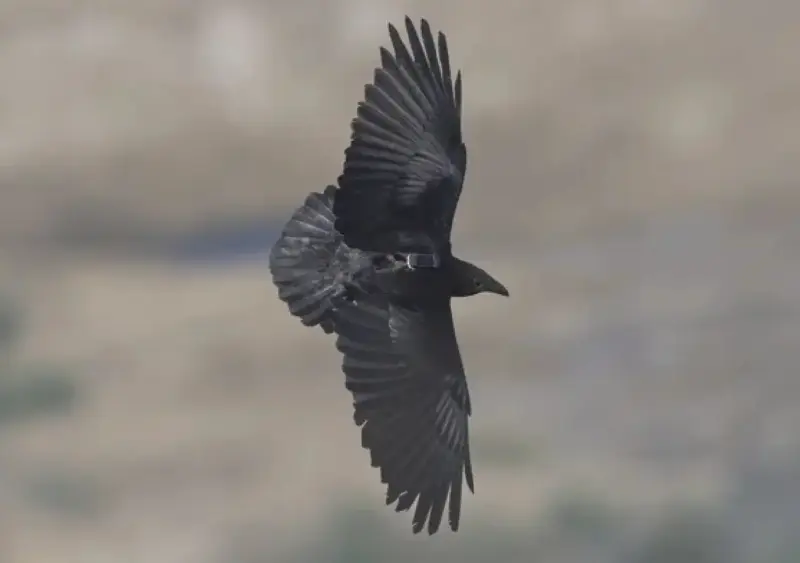

In one of the world's most extreme environments, a remarkable bird continues to survive and flourish. Brown-necked ravens living around the Dead Sea have adapted to conditions where very few animals can endure.
Known scientifically as Brown-necked raven, these highly intelligent birds inhabit the rocky cliffs and desert landscapes surrounding the Dead Sea.
The Dead Sea is famous for its extreme salinity and intense heat. Its waters cannot support most aquatic life, yet the surrounding terrain offers a specialised habitat for hardy desert species.
Ravens survive not by depending on freshwater lakes or rivers, but through food sources and behavioural adaptation.
Experts say these ravens obtain much of their moisture from prey and scavenged food. They feed on insects, reptiles, carrion and leftover human food when available.
Their flexibility gives them a major advantage over less adaptable animals in the harsh desert setting.
Ravens are widely regarded as some of the most intelligent birds. Studies have shown they can solve problems, remember locations and modify feeding behaviour based on changing conditions.
That intelligence helps them locate scarce resources around the Dead Sea.
Another survival strategy is nesting on steep cliffs. Elevated nesting sites offer protection from predators and avoid extreme ground temperatures.
The rocky cliffs also provide cooler shaded microclimates, helping chicks survive the desert heat.
As scavengers, ravens play an important ecological role by consuming dead animals, reducing disease risk and recycling nutrients.
Their presence is also seen as a sign that an ecosystem can still support life despite harsh conditions.
Where many species would fail, these ravens continue to adapt and endure—showing how intelligence and resilience can overcome even the toughest environments.