





Bengaluru: Some microorganisms from Earth could survive in the extremely cold and permanently shadowed regions near the Moon's south pole, according to a NASA and University of Maryland study that could have important implications for future lunar exploration.
The research suggests that microbes carried unintentionally by astronauts could persist for longer than previously expected in certain protected lunar environments. Scientists say this makes it increasingly important to understand the microbial and chemical conditions of potential landing sites before human activity changes them.
The findings are particularly significant as space agencies prepare for a new era of lunar exploration. Future missions could send astronauts and equipment to areas around the lunar south pole that have remained largely untouched by human activity.
Some lunar shadows could provide temporary shelter
The Moon has no substantial atmosphere and is exposed to intense radiation, making its surface extremely hostile to life as we know it.
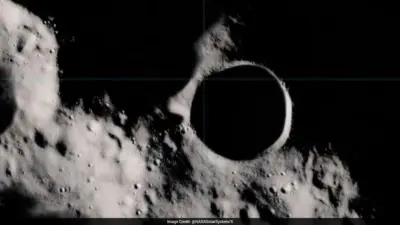
However, the lunar south pole contains craters and depressions that remain permanently or almost permanently in shadow. Because sunlight does not reach some of these locations, temperatures can remain extremely low and radiation exposure can be reduced.
Researchers used elevation maps and temperature information from NASA’s Lunar Reconnaissance Orbiter to model environmental conditions in potential landing areas. They examined three regions near the south pole - Nobile Rim, Connecting Ridge and De Gerlache Rim - to identify areas where Earth microorganisms might survive.
The computer models revealed what researchers described as potentially survivable "niches". Some were relatively large, while others could be as small as the area covered by an astronaut’s boot.
The finding does not mean that microbes could thrive and reproduce on the Moon. Instead, the study indicates that certain microorganisms may be capable of remaining alive in a dormant state for limited periods.
Five common microbes examined
The researchers examined five microorganisms that are relevant to spaceflight and human environments.
They included Staphylococcus aureus, a bacterium commonly found on human skin, as well as Aspergillus niger, a fungus known for its resilience. Other organisms examined included Bacillus subtilis, Deinococcus radiodurans and species of Fusarium.
The researchers compared the organisms’ known tolerance to heat and ultraviolet radiation with environmental conditions expected in different parts of the lunar south polar region.
The models indicated that all five organisms could potentially remain dormant for at least 24 hours under some of the simulated conditions. Aspergillus niger appeared particularly resilient and could potentially survive for about a week in some suitable locations.
The researchers emphasise that survival in this context means remaining alive rather than growing or reproducing.
Why contamination matters
The discovery raises an important problem for lunar science: humans could unintentionally carry Earth life to places scientists want to study in their natural state.
Astronauts naturally carry large populations of microorganisms on their skin and bodies. Even with strict sterilisation and contamination-control procedures, completely eliminating microbes from human missions is extremely difficult.
Robotic spacecraft can undergo high-temperature sterilisation procedures, but similar treatment cannot be applied to living astronauts.
As a result, crewed missions create a new challenge for scientists trying to determine what existed on the Moon before humans arrived.
A small amount of Earth-derived biological material could potentially complicate the interpretation of future samples, particularly if scientists find organic compounds or other chemical signatures that could initially appear unusual.
The Moon could become a natural laboratory
The researchers say the discovery is not entirely negative.
The Moon’s harsh environment could provide scientists with an opportunity to study the limits of microbial survival under conditions that are difficult to reproduce on Earth.
The permanently shadowed regions near the south pole offer a particularly interesting natural laboratory. Scientists can investigate how microorganisms respond to extreme cold, darkness, radiation and the absence of an atmosphere.
Such research could improve understanding of how life responds to extreme environments and help scientists prepare for future human missions.
It could also contribute to planetary protection efforts as exploration expands beyond the Moon.
Lessons for future Mars missions
The implications extend beyond lunar exploration.
Scientists searching for evidence of ancient or existing life on Mars will need to distinguish between material that originated on Mars and contamination accidentally transported from Earth.
This is especially important because future missions could involve more sophisticated sampling and potentially the return of extraterrestrial material to Earth.
Researchers therefore want to establish a clear baseline of the environment before human exploration alters it. Understanding what microorganisms are already present in spacecraft and human habitats - and where they could potentially survive - can help scientists recognise contamination when it occurs.
The issue is part of the broader principle of planetary protection, which seeks to prevent Earth organisms from contaminating other worlds and to protect Earth from potentially harmful extraterrestrial material.
Not evidence of life on the Moon
The study does not suggest that the Moon has its own microbial life.
NASA scientists stressed that there is currently no evidence that the Moon provides the essential conditions required for microbes to grow and reproduce. In particular, liquid water and suitable temperatures are generally absent from the lunar surface.
The research instead demonstrates that some Earth organisms may be able to endure certain lunar conditions for limited periods, particularly when protected from direct sunlight and radiation.
That distinction is important because the ability to survive temporarily is very different from the ability to establish a self-sustaining ecosystem.
Human exploration will change the lunar environment
The findings come as the Moon moves towards a new phase of exploration involving more frequent robotic and crewed missions.
Earlier Apollo missions landed near the lunar equator, while future missions are expected to place greater emphasis on the south polar region because of its scientific importance and the presence of permanently shadowed areas.
Some of these areas are also of interest because water ice may be preserved in extremely cold environments.
As human activity increases, scientists will need to balance exploration with the preservation of sites that may contain valuable clues about the Moon’s geological and chemical history.
Establishing a microbial baseline before major human activity takes place could therefore become an important part of lunar mission planning.
A warning for the next era of space exploration
The research offers a reminder that astronauts do not travel into space alone. They also carry an invisible biological ecosystem with them.
The ability of common Earth microbes to survive temporarily in some lunar shadows means future missions will need careful contamination-control measures, particularly around scientifically sensitive locations.
For scientists, the challenge is not simply keeping Earth life away from the Moon. It is also ensuring that when future explorers discover something unusual, they can confidently determine whether it originated naturally on the Moon or arrived with human activity.
As humanity prepares to establish a more sustained presence beyond Earth, understanding these microscopic travellers could be just as important as designing rockets, habitats and spacesuits.
The Moon may appear lifeless and hostile, but the latest research shows that even its darkest corners could provide temporary shelter for some of Earth’s toughest microorganisms - making careful planetary protection increasingly important as lunar exploration moves forward.