
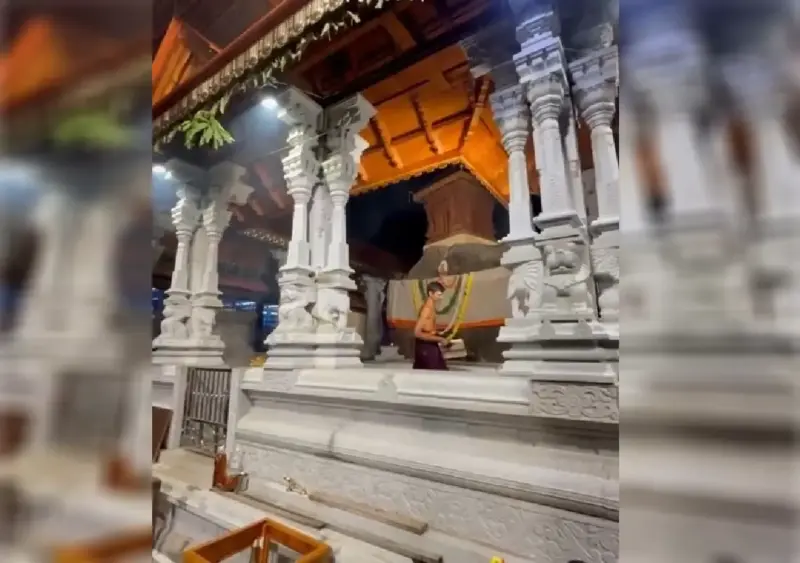

Mangaluru: A large number of devotees gathered at the revered Shree Kshetra Kateel on April 2 to witness the Adhivasa and Shakti Dandaka Mandala Pooja held as part of the Brahmakalasha ceremony of the Rakeshwari Temple.
The temple premises turned into a vibrant spiritual hub as thousands assembled to seek the blessings of Goddess Durga Parameshwari.
The rituals, conducted with deep religious fervour, reflected the rich traditions associated with temple ceremonies in coastal Karnataka. Devotees from different parts of the district and neighbouring regions participated in the sacred proceedings, making the occasion both devotional and festive.
The Adhivasa and Shakti Dandaka Mandala Pooja are considered significant preparatory rituals in the Brahmakalasha ceremony, which marks the spiritual rejuvenation of a temple. Priests carried out the ceremonies strictly in accordance with age-old customs, invoking divine energies and blessings for devotees.
The atmosphere within the temple complex was filled with chants, rituals, and spiritual vibrations, creating a sense of devotion among those present. The Brahmakalasha ceremony, known for its religious importance, symbolises purification and sanctification, drawing devotees in large numbers whenever it is आयोजित.
Despite the heavy turnout, the temple authorities ensured that the rituals were conducted smoothly. Volunteers were deployed at key points to manage the crowd and assist devotees, enabling them to participate in the ceremonies without difficulty.
One of the major highlights of the event was the large-scale saree distribution programme organised by philanthropist Shashidhar B. Shetty. More than 15,000 sarees were distributed to women devotees during the occasion, drawing widespread appreciation from the public.
The initiative witnessed an overwhelming response, with long queues of beneficiaries seen across the temple premises. Many devotees lauded the gesture, describing it as a meaningful act of charity aligned with the spirit of the occasion.
Such philanthropic efforts are often an integral part of temple festivals in the region, where acts of giving are seen as a form of service and devotion. The saree distribution not only supported women devotees but also added to the celebratory atmosphere of the event.
The temple authorities, along with volunteers, made elaborate arrangements to handle the large influx of devotees. Crowd management systems, queue arrangements, and assistance services were put in place to ensure that the rituals proceeded without disruption.
Despite the massive gathering, the event was conducted in an orderly manner, reflecting the experience and preparedness of the organisers. Devotees were able to participate in the pooja, receive prasadam, and witness the rituals without major inconvenience.
The successful organisation of the event highlighted the strong coordination between temple management and volunteers, ensuring that both religious and logistical aspects were handled efficiently.
The Brahmakalasha-related rituals at Kateel stood as a testament to the enduring cultural and spiritual traditions of the region. The event brought together devotion, community participation, and charitable initiatives, creating a holistic religious experience for devotees.
As thousands offered prayers and took part in the ceremonies, the occasion reinforced the temple's significance as a major spiritual centre in Dakshina Kannada. The combination of sacred rituals and social service made the event memorable for all those who attended.
In conclusion, the grand celebrations at Shree Kshetra Kateel reflected the essence of faith and community spirit, leaving devotees with a sense of fulfilment and divine connection.