




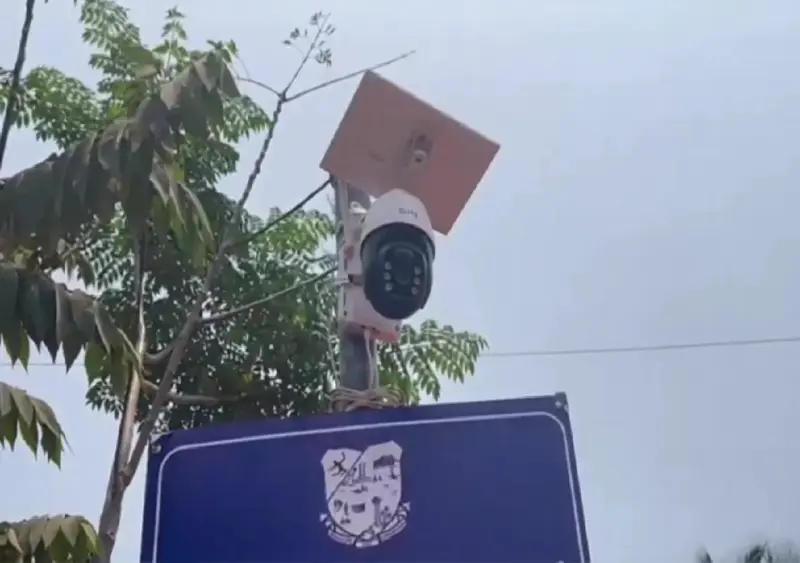

Mangaluru: Ward number 8, Hosabettu, under the Surathkal subdivision of the Mangaluru City Corporation (MCC), has taken a major step towards improving public safety and civic management with the launch of an advanced smart security system.
The initiative, which combines large-scale CCTV surveillance with a QR code-based public information network, is being recognised as a pioneering effort in Karnataka's urban local governance sector.
As part of the first phase of the project, 107 high-tech CCTV cameras have been installed across different parts of the ward at an estimated cost of Rs 39 lakh. The surveillance network will operate round-the-clock and is aimed at strengthening security, monitoring illegal activities, and improving cleanliness standards within the locality.
The project was conceptualised under the leadership of local corporator Varun Chowta, who said the initiative was designed to create a safer and more organised residential environment. Residents and local associations have welcomed the move, calling it a practical use of technology to improve civic administration at the grassroots level.
The CCTV network has been strategically installed across key roads, junctions, residential pockets, and public spaces within Hosabettu ward. Authorities believe the extensive camera coverage will act as a strong deterrent against theft, anti-social activities, and other unlawful incidents.
The cameras are equipped to function continuously throughout the day and night, enabling real-time monitoring and recording. Officials associated with the project stated that surveillance footage could also assist law enforcement agencies during investigations and emergency situations.
Apart from enhancing public safety, the cameras are also expected to play a vital role in maintaining cleanliness and civic discipline. Illegal dumping of waste and improper garbage disposal have been recurring concerns in many urban wards. Through constant monitoring, authorities hope to identify violators and encourage residents to follow proper waste management practices.
According to civic representatives, this combination of safety surveillance and cleanliness monitoring makes the initiative unique and more comprehensive than conventional CCTV projects seen in other urban areas.
In addition to the surveillance system, Hosabettu ward has also introduced a QR code-enabled 'Digital Bridge' platform to improve access to essential public information.
QR code boards have been placed at several prominent locations across the ward. Residents can scan these codes using their mobile phones to instantly access important details related to emergency and public services in the area.
The information available through the digital system includes contact details of nearby hospitals, police services, temples, churches, mosques, and other important institutions. The initiative is expected to be especially useful during emergencies, when quick access to verified contact information becomes crucial.
One of the key highlights of the Digital Bridge system is its multilingual accessibility. The interface has been designed in Tulu, Kannada, and English, ensuring that local residents from different linguistic backgrounds can easily use the platform without difficulty.
Civic authorities believe the inclusion of regional language support will help improve public participation and ensure wider acceptance of the technology-driven system among residents.
Local residents and community organisations have expressed appreciation for the project and its practical benefits. Dhanaraj, president of the Maruti Colony Residents' Association, stated that the system has already been implemented in important localities such as Maruti Colony and NMPT Colony.
According to residents, the availability of emergency contact information through QR codes has made public services more accessible and convenient. Senior citizens and families living in the area are expected to benefit significantly from the quick information-sharing system.
Residents also believe the CCTV network will create a greater sense of security, especially during late evening and night hours. Many have pointed out that visible surveillance infrastructure often discourages criminal and anti-social behaviour, leading to safer neighbourhoods.
Community leaders further stated that the initiative demonstrates how technology can be effectively integrated into local governance without causing inconvenience to the public.
The Hosabettu smart security initiative is being viewed as a possible model for replication in other wards across Mangaluru and Karnataka. Civic observers note that combining surveillance systems with digital public service access creates a more efficient and citizen-friendly administrative framework.
The project highlights the growing role of technology in urban governance, particularly in improving transparency, public convenience, and civic accountability. If successful in the long term, similar systems could be introduced in additional residential and commercial areas under the Mangaluru City Corporation.
With its emphasis on security, cleanliness, and digital accessibility, Hosabettu ward has positioned itself as an example of modern civic administration at the local level. The initiative reflects how targeted technological interventions can contribute to safer neighbourhoods and better quality of life for residents.