
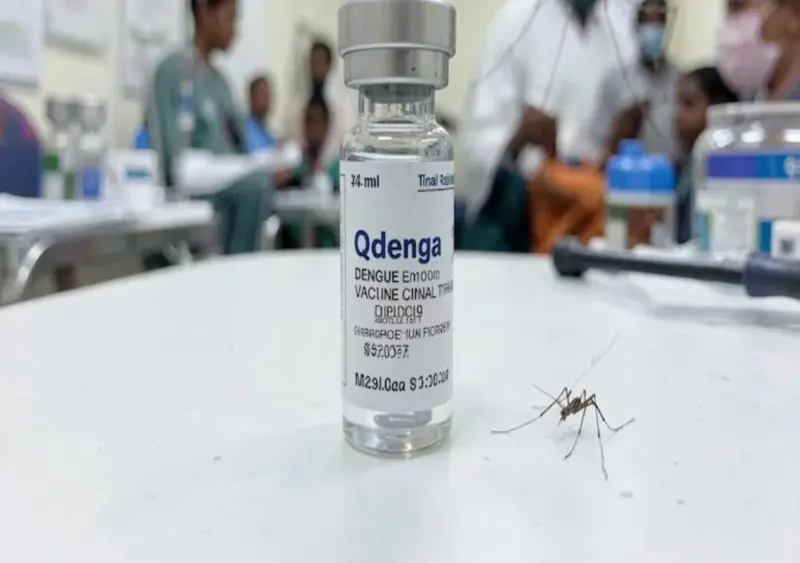

New Delhi: India is preparing to introduce Qdenga, a dengue vaccine developed by Takeda Pharmaceutical Company, marking a significant step in tackling the country's growing burden of Dengue.
The vaccine is expected to be rolled out by 2026, subject to regulatory approval from the Central Drugs Standard Control Organization.
With dengue cases rising steadily due to climate change and urbanisation, experts say the arrival of a vaccine could be a game-changer for public health in India.
Qdenga (TAK-003) is a dengue vaccine designed to protect against all four virus serotypes, a critical requirement in India where the disease is considered hyperendemic.
According to global data, the vaccine has been tested on over 60,000 participants and is already approved in more than 40 countries. It has also received prequalification from the World Health Organization, indicating strong confidence in its safety and efficacy.
Takeda plans to manufacture the vaccine in India through a partnership with Biological E, aligning with the government's 'Make in India' initiative.
Doctors explain that Qdenga is administered in two doses, typically spaced about three months apart. A key advantage is that it can be given to individuals regardless of whether they have had dengue before—an improvement over earlier vaccines.
Clinical studies suggest the vaccine reduces the risk of infection and significantly lowers the chances of severe dengue and hospitalisation, which is crucial during peak outbreak seasons when healthcare systems are under strain.
Health experts indicate that initial rollout guidelines—expected from the Indian Council of Medical Research and the Ministry of Health and Family Welfare—may prioritise:
These groups face a higher likelihood of exposure and complications.
Like most vaccines, Qdenga may cause mild side effects such as fever, headache, fatigue or soreness at the injection site. Serious adverse reactions are considered rare, according to experts.
Doctors emphasise that vaccination should complement—not replace—existing preventive measures such as mosquito control, use of repellents and maintaining hygiene.
India has seen a nearly 40 per cent rise in dengue cases over the past decade, with frequent outbreaks reported in states like Tamil Nadu, Karnataka and Maharashtra.
The introduction of Qdenga could significantly reduce hospitalisations and deaths if integrated effectively into existing disease control programmes.
However, experts caution that success will depend on:
A coordinated approach between central and state health systems will be essential to maximise the vaccine's impact.
While Qdenga offers hope, doctors underline that it is not a standalone cure. Dengue prevention will continue to rely on a combination of vaccination, environmental control and community awareness.
If implemented effectively, the vaccine could mark a turning point in India's fight against dengue, potentially saving thousands of lives each year.