




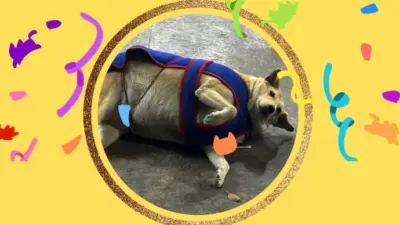

New Delhi: Delhi's unusual 'Fat Dog of Delhi' contest has ended with the late Gola, also known as Rajpal Singh, from SDA Market in Hauz Khas winning the title after receiving 66,952 votes in the final round.
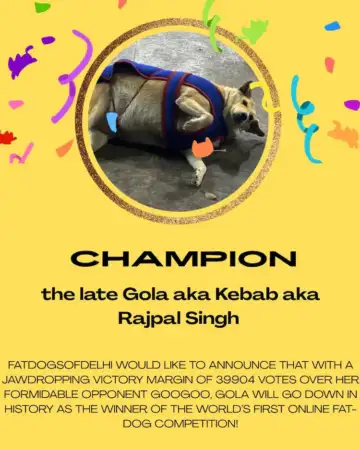
The viral competition drew around 94,000 votes in its final round, with Gola securing 71.2 per cent of the total. He defeated runner-up Googoo of Saket by 39,904 votes and emerged ahead of 62 other dogs who had participated in the contest.
The result brought an emotional end to a competition that began as a playful Instagram initiative and quickly grew into a city-wide phenomenon, complete with online campaigning, neighbourhood loyalties, fan pages, posters and physical polling booths.
Gola wins with 66,952 votes
Gola, a much-loved neighbourhood dog from SDA Market, received 66,952 votes to win the title.
His victory came despite the fact that he died during the course of the competition, making the final result particularly poignant for supporters who had followed his journey.
Googoo of Saket finished second, while the remaining contestants competed for the title over the course of the two-week campaign.
The contest attracted nearly a lakh followers on Instagram and generated widespread interest across Delhi.
Dog lovers could vote through the competition's Instagram handle, while organisers also created an offline voting option.
Four polling booths were established at different locations across the capital, with more than 1,000 people reportedly casting their votes in person.
The physical voting exercise transformed what started as a social media contest into an unusual public spectacle.
Delhi's 'paw-litical' election goes offline
The contest developed many of the features associated with an election campaign.
Supporters rallied behind dogs from their neighbourhoods, created campaign material and urged followers to vote for their preferred contestants.
Mahakutteshwar, Chonki, Gajinder and Kutta Singh were among the other dogs who became familiar names during the competition.
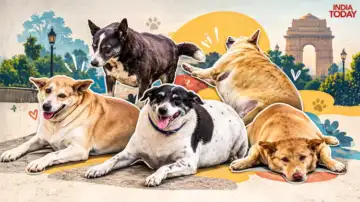
The dogs were not simply identified by their physical appearance. Their names, localities and individual personalities became central to the campaign, with supporters treating the animals as representatives of their neighbourhoods.
People also shared photographs of dogs who had not made the official shortlist, joking that their own pets or community dogs could have won the title.
The unusual premise helped the competition spread rapidly on social media, turning Delhi's community dogs into unlikely internet celebrities.
Contest ends with prizes and donations
The finale also brought a series of prizes and donations for the participating dogs.
District by Zomato, in collaboration with Sienna Made in Bengal, announced custom ceramic bowls for every contestant.
The collaboration also pledged Rs 50,000 to an animal shelter chosen by the contest administrator, another Rs 50,000 towards a year's supply of food and Rs 30,000 for beds and collars.
Bearhugs also committed Rs 50,000 towards medical expenses for the contestants, along with treats, beds and reflective collars.
Other prizes included cakes, gourmet meals, toys, jackets, deworming products and supplements.
Because two of the top three contestants have died, their prizes will be passed on to the next eligible candidates.
Organisers have also indicated that caretakers who do not require the prizes can redirect them towards street dogs and animal shelters.
That has given the competition an animal-welfare element beyond its original entertainment-focused premise.
How Fat Dogs of Delhi began
The contest had relatively modest beginnings.
A Delhi University student, who has chosen to remain anonymous, initially created an Instagram page to share photographs of overweight dogs she spotted around the city.
The account soon attracted submissions from other Delhi residents, who sent photographs of dogs along with their names and localities.
About two weeks before the finale, the page was transformed into a competition.
What began as an Instagram account quickly developed into a large online community.
The growing audience began organising campaigns around individual dogs, while neighbourhood groups and supporters rallied behind their favourites.
The page eventually accumulated nearly a lakh followers.
Neighbourhood dogs become celebrities
The appeal of the contest lay partly in its simplicity.
Delhi residents were invited to celebrate dogs they recognised from their own streets, markets and neighbourhoods.
Instead of being anonymous community animals, the contestants acquired names and distinct identities.
Supporters created fan pages, shared campaign posts and encouraged others to vote.
The result was a light-hearted competition that brought together people of different ages and backgrounds around animals that are ordinarily part of the everyday urban landscape.
The campaign also demonstrated how quickly a social media trend can translate into offline participation.
The four polling booths attracted more than 1,000 physical votes, adding a real-world element to an event that had begun entirely online.
Health concerns spark debate
Despite the fun surrounding the contest, concerns about the health of the participating dogs emerged during the campaign.
Some dog lovers criticised the competition for potentially glorifying obesity and turning a possible health problem into entertainment.
Veterinarians and animal welfare advocates have pointed out that excess weight in dogs can be associated with problems involving mobility, joints and overall health.
The concern was particularly relevant because the competition was explicitly centred on dogs being overweight.
Googoo, who finished second, offered an ironic example of the issue. The Saket dog has reportedly been placed on a weight-management diet at an animal-care centre and is receiving care aimed at helping him lose weight.
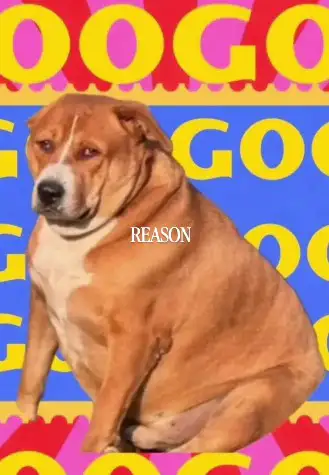
That raised questions about whether celebrating a dog for its size could inadvertently encourage unhealthy feeding practices.
Supporters of the contest, however, argued that its wider impact should also be considered.
Supporters say visibility can help community dogs
Those backing the initiative said the attention generated by the competition could benefit community dogs by making them more visible.
The argument is that people who may normally overlook street animals are being encouraged to recognise them as part of their neighbourhoods.
The popularity of Gola, Googoo and the other contestants also highlighted the relationships between community dogs and the people who feed and care for them.
For some animal lovers, that visibility is valuable in itself.
The contest has also moved beyond photographs and voting. The Instagram page has been used to share adoption appeals and raise funds for NGOs and independent groups working with street animals.
The growing platform has therefore become a means of directing attention towards animals that need medical care, food, shelter or permanent homes.
Gola's victory leaves a lasting impression
Gola's victory has given the contest an emotional conclusion.
The SDA Market dog became one of the most popular contestants during the campaign, and his death before the final result made his supporters' eventual victory particularly poignant.
His 66,952 votes represented a substantial share of the final vote and gave him a clear lead over Googoo.
The result also reflects the neighbourhood-based nature of the competition. People were not simply voting for a photograph; many were supporting a dog they knew from their own area and had encountered in everyday life.
That connection helped transform an unconventional internet contest into a wider community event.
More than just a viral contest
The Fat Dogs of Delhi competition may have started as a playful social media experiment, but its impact extended beyond the final vote.
It brought attention to dozens of community dogs, created a network of supporters and encouraged people to participate both online and in person.
At the same time, the debate over canine obesity highlighted the importance of separating affection for an animal from the celebration of a potentially unhealthy condition.
The organisers' decision to redirect some prizes towards animal shelters and street dogs, along with the use of the Instagram platform for adoption appeals and fundraising, has given the initiative a broader welfare dimension.
For Delhi, the contest ended with Gola of SDA Market taking the title with 66,952 votes.
For the city's community dogs, however, the attention generated by the competition could continue well beyond the final tally, particularly if the platform is used to encourage adoption, responsible care and support for animals in need.