
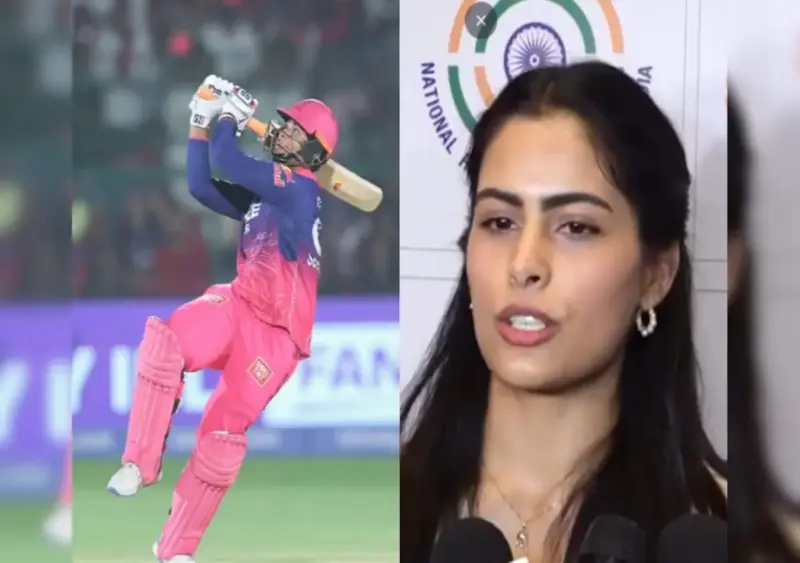

New Delhi: A seemingly simple question to Manu Bhaker about teenage cricket sensation Vaibhav Sooryavanshi has triggered a wider debate on social media—one that goes beyond the two athletes and touches on how different sports are valued in India.
The moment came during the 75th anniversary celebrations of the National Rifle Association of India, where Bhaker was asked to comment on Sooryavanshi's meteoric rise. Her response was thoughtful and encouraging—but the question itself didn't sit well with many.
Bhaker, India's first woman shooter to win an Olympic medal, responded with maturity:
'If the mentorship is good, the company around him is good… then age is just a number. There is no age for talent.'
Her remarks highlighted the importance of guidance and environment for young athletes, regardless of sport.
Bhaker herself is coming off a historic campaign at the Paris 2024 Olympics, where she won two bronze medals in the 10m pistol events—becoming the first Indian to win two medals at a single Olympic edition.
The backlash wasn't about Bhaker's answer—it was about the question.
Joy Bhattacharjya, former team director of Kolkata Knight Riders, summed up the sentiment:
'She is an Olympic medallist. To ask her what she thinks of a cricketer is unfair to her achievements and her sport.'
Many users echoed this view, arguing that:
The incident reignited a familiar criticism—that India's sporting discourse remains heavily skewed towards cricket, even when celebrating achievements in other disciplines.
To be fair, Sooryavanshi's rise has been extraordinary.
At just 15, he has:
In the ongoing IPL season, he has amassed 357 runs in eight innings at a staggering strike rate above 230.
His performances have made him one of the most talked-about young talents in world cricket.
The controversy reflects a deeper imbalance in Indian sports culture.
Cricket's massive popularity often overshadows achievements in disciplines like shooting, athletics, wrestling, and more. Even Olympic medallists—who represent the country on the biggest global stage—sometimes struggle for equal attention.
The criticism, therefore, isn't about Sooryavanshi's success. It's about context:
What started as a routine question has turned into a broader conversation about recognition and respect across sports in India.
Manu Bhaker handled the moment with grace. Vaibhav Sooryavanshi continues to shine as a prodigious talent. But the reaction shows that fans are increasingly aware—and vocal—about how different sports and athletes are treated.
In the end, the debate is less about two individuals and more about the need for a more balanced sporting narrative in the country.
(Except for the headline, this story has not been edited by News Karnataka staff and is published from a syndicated feed.)