
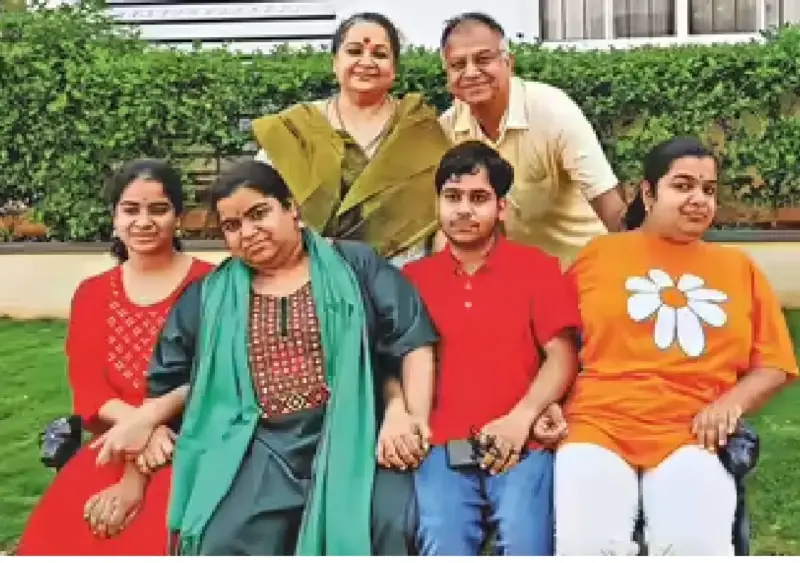

What began as a deeply personal journey of raising four children — including two with autism — has transformed into a powerful mission for inclusion, awareness, and dignity, led by Mumbai-based author and caregiver Sangeetha Chakrapani.
Sangeetha's life took an unexpected turn when she gave birth to quadruplets. While she embraced the challenge of raising four children, she describes the diagnosis of autism in two of them as the most difficult phase to accept.
Over time, however, she discovered a new perspective — one where autism and happiness can coexist. Her journey, marked by moments of isolation and resilience, evolved into one of self-acceptance and deeper understanding of her children's unique identities.
In 2015, Sangeetha founded the Together Foundation, aimed at providing skill training and employment opportunities for young adults with autism. What started with hesitation from businesses gradually grew into a recognised initiative, with certified ventures and expanding impact.
She believes the future lies in creating 'autism-friendly' workplaces that support neurodivergent individuals while also generating opportunities for others.
Addressing ongoing debates, Sangeetha emphasises that autism does not have a proven cure and that families should focus on safe, supportive therapies rather than unverified treatments.
She highlights that while progress may be slow, consistent support helps individuals with autism learn, grow, and adapt in meaningful ways.
One of the biggest concerns for parents, she notes, is the future of their children. While private residential facilities offer solutions for some, affordability remains a major barrier for many families.
She is now working towards developing inclusive, cost-effective residential communities, supported by corporate social responsibility (CSR) initiatives.
Sangeetha points out that mainstream schools often lack the resources for inclusive education, pushing many families towards special schools. She advocates for better infrastructure, trained staff, and a shift in perception — urging society to see special schools as essential, not secondary.
Beyond children, she stresses the importance of supporting parents, who often face emotional and physical strain. Compassion, community support, and shared responsibility, she says, are crucial.
Sangeetha's story is not just about raising children with autism — it is about redefining how society views neurodiversity. Her work highlights that individuals with autism, whether extraordinary or ordinary, deserve equal opportunities, respect, and a life of dignity.