
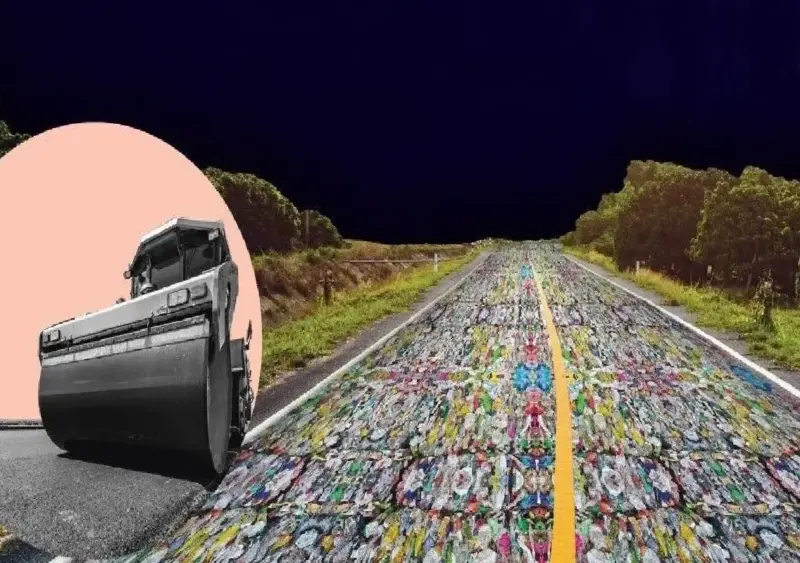

In a significant step towards sustainable urban development, the Greater Bengaluru Authority (GBA) has announced plans to utilise plastic waste collected across the city for road construction.
GBA Chief Commissioner Maheshwar Rao revealed the initiative while interacting with sanitation workers during a 'discussion over tea' programme at the Anjanapura ward mustering centre.
The initiative forms part of the Swachh Survekshan 2025-26 campaign, which focuses on improving urban cleanliness and promoting efficient waste utilisation.
Officials said Bengaluru currently generates nearly 520 metric tonnes of low-grade plastic waste (Refuse Derived Fuel - RDF) daily. Much of this waste is currently transported to cement factories, where it is used as fuel and generates limited revenue for the city.
Maheshwar Rao explained that utilising excess plastic waste for road asphalting would not only reduce landfill pressure but also strengthen road durability. The move is expected to contribute to both environmental protection and improved infrastructure management.
Experts note that plastic mixed with bitumen can enhance road quality by improving resistance to water damage and increasing longevity.
During the interaction, Rao stressed that the success of such initiatives depends heavily on proper waste segregation at the household level.
Residents were urged to separate wet waste and dry waste carefully to ensure recyclable materials such as plastic can be efficiently processed. Proper segregation, officials said, will help authorities channel suitable plastic waste directly for road construction projects.
Authorities have also directed officials to ensure that plastic collected from households is systematically redirected for infrastructure purposes wherever feasible.
At present, the city operates around 190 dry waste collection centres that process recyclable materials.
To strengthen the system, the GBA has now directed officials to establish one dry waste collection centre in each of Bengaluru's 369 wards. Officials have been instructed to identify suitable land in wards that currently lack such facilities.
In Anjanapura, approximately 1.20 acres of vacant land near an existing dry waste collection unit has been earmarked for further waste processing infrastructure. Plans include setting up a construction debris processing plant along with a biomethanation facility to improve recycling and waste conversion.
Rao has asked officials to prepare and submit a detailed project report for these proposed facilities.
The meeting also focused on improving facilities for sanitation workers. The Chief Commissioner directed officials to construct 'Suvidha Cabins' at all mustering centres, providing workers with rest spaces and essential amenities.
In addition, CCTV cameras will be installed at these locations to enhance security and monitoring.
South Zone Commissioner K.N. Ramesh and other officials were present during the discussion, expressing support for measures aimed at strengthening waste management and improving working conditions for sanitation staff.
Officials believe the initiative could play an important role in creating a cleaner, greener, and more sustainable Bengaluru while ensuring better utilisation of the city's growing plastic waste.