
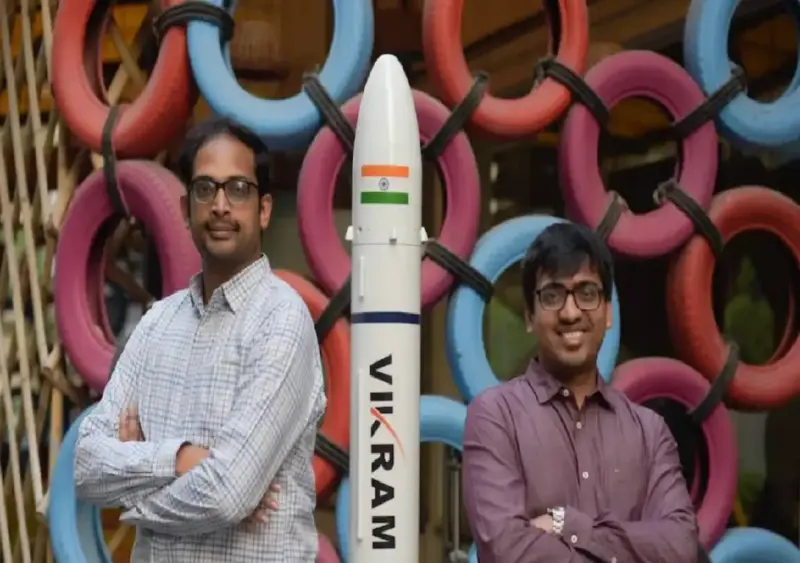

Hyderabad: India's startup ecosystem is witnessing fresh momentum in 2026 as aerospace startupSkyroot Aerospaceand fintech firm KreditBee entered the country's growing unicorn club, reflecting strong investor confidence in emerging sectors beyond traditional technology businesses.
India's startup landscape has expanded significantly over the past few years, with nearly 2.3 lakh startups now recognised by the Department for Promotion of Industry and Internal Trade (DPIIT). According to market intelligence platform Tracxn, India has created 131 unicorns so far, with four startups crossing the $1 billion valuation mark in 2026 as of May 7.
However, only 93 of these unicorns currently remain active, indicating the challenges many startups continue to face amid changing market conditions and funding cycles.
Hyderabad-based Skyroot Aerospacesecured $60 million, nearly Rs 570 crore, in a funding round co-led by Sherpalo Ventures and GIC. The round also saw participation from BlackRock, the founders of Greenko Group, Arkam Ventures, Playbook Partners and the Shanghvi Family Office.
The company said the fresh capital will be used to increase launch frequency, strengthen manufacturing capabilities and accelerate the development of its next-generation Vikram-2 rocket.
Tech investor Ram Shriram is also expected to join the company's board as part of the investment deal.
Founded by former ISRO scientists Pawan Kumar Chandana and Naga Bharath Daka, Skyroot Aerospace became one of the first private space companies in India to gain access to ISRO facilities and technical expertise following reforms in the country's space sector.
The startup gained nationwide attention in 2022 after the successful launch of Vikram-S, a suborbital rocket that reached space, marking a major milestone for India's private aerospace industry.
Skyroot's rise reflects the increasing opportunities in India's space technology sector after the government opened the industry to private participation.
Experts believe India's low-cost engineering ecosystem and strong scientific talent pool are helping domestic aerospace startups attract global investors. The growing commercial demand for satellite launches and space-related services has also contributed to increased investor interest.
The success of companies like Skyroot Aerospace is expected to encourage more deep-tech and aerospace startups in the country, expanding India's startup ecosystem beyond e-commerce, fintech and software services.
Industry observers noted that private space companies could play a crucial role in strengthening India's global position in the rapidly growing commercial space market over the coming decade.
Apart from Skyroot Aerospace, Bengaluru-based fintech startup KreditBee also entered the unicorn club after raising $280 million in a pre-IPO funding round.
The investment valued the consumer lending platform at around $1.5 billion.
The funding round was led by Motilal Oswal Alternates, Hornbill Capital and MUFG-backed Dragon Funds. Existing and new investors including Premji Invest and Advent International also participated in the round.
WhiteOak Capital and A.P. Moller Holding were among the other investors contributing to the latest funding round, taking the company's total funding to nearly $540 million.
KreditBee has emerged as one of India's prominent digital lending platforms, catering mainly to young professionals and first-time borrowers through technology-driven financial services.
India's unicorn journey began in 2011 withInMobibecoming the country's first startup to achieve a valuation of over $1 billion.
Since then, India's startup ecosystem has witnessed rapid growth driven by digital adoption, rising internet penetration, government policy support and increased global investor participation.
The country recorded its biggest unicorn boom in 2021, when 44 startups entered the unicorn club. This was followed by 24 new unicorns in 2022. However, funding activity slowed globally in the following years, with India adding only two unicorns in 2023 and seven in 2024.
The pace improved again in 2025 with nine unicorn additions, while four startups have already achieved unicorn status in the first few months of 2026.
Experts believe investor sentiment is gradually improving, particularly for startups operating in sectors such as fintech, artificial intelligence, clean energy, defence technology and aerospace.
The emergence of Skyroot Aerospace and KreditBee highlights the diversification of India's startup ecosystem, with investors increasingly backing companies solving complex technological and financial challenges.
While fintech continues to remain one of the strongest sectors for investment, the entry of an aerospace startup into the unicorn club signals growing confidence in India's deep-tech capabilities.
Analysts expect India's startup ecosystem to continue expanding as innovation, policy reforms and private investments create opportunities across multiple sectors.