
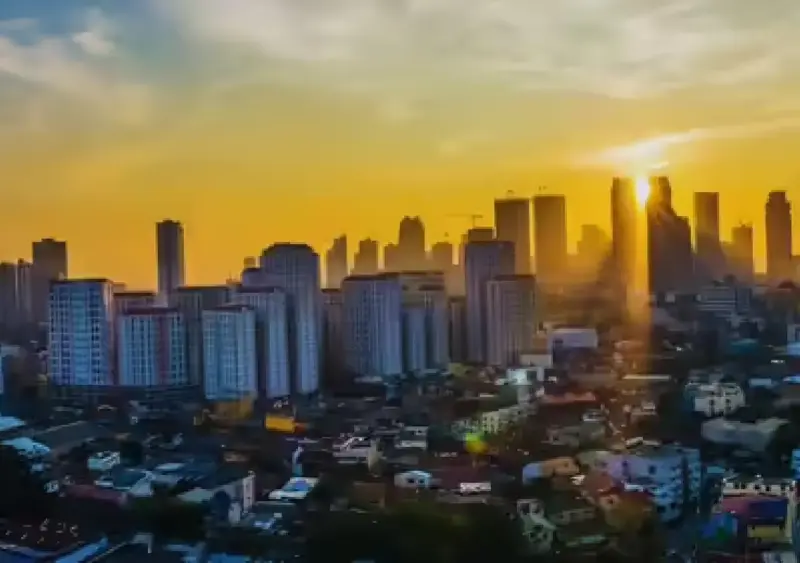

Rapid urbanisation and economic opportunities have led to a massive population concentration in several Indian cities. According to recent estimates, Mumbai, Chennai, Kolkata, Surat and Ahmedabad are among the most densely populated cities in India, with thousands of people living within each square kilometre.
These cities continue to attract migrants for employment, education and business opportunities, leading to intense urban density.
Mumbai remains the densest major city in India, with an estimated population density of 27,301 people per square kilometre.
The city's unique island geography limits horizontal expansion, forcing vertical growth through high-rise buildings and compact housing. Mumbai's role as India's financial and commercial capital also draws millions of workers and migrants.
Chennai ranks second with an estimated 26,553 people per square kilometre.
Experts attribute this density partly to the city's historically fixed municipal boundaries, which have remained relatively compact even as the population increased significantly over the years.
Kolkata stands third with a density of about 24,760 people per square kilometre.
The city's urban expansion is restricted by natural features such as the Hooghly River and surrounding wetlands, resulting in highly concentrated residential neighbourhoods in the historic city area.
Surat, known globally for its diamond polishing and textile industries, has a density of around 24,073 people per square kilometre.
The city's strong industrial economy continues to attract large numbers of migrant workers, many of whom live close to manufacturing zones, contributing to high population density.
Ahmedabad ranks fifth with an estimated density of 20,911 people per square kilometre.
As a major commercial and industrial centre in Gujarat, the city has experienced steady population growth, especially within its historic urban areas and expanding business districts.
Urban planners say that increasing density in major cities reflects both economic growth and infrastructure challenges, highlighting the need for sustainable planning, improved public transport and better housing solutions in rapidly expanding urban centres.