




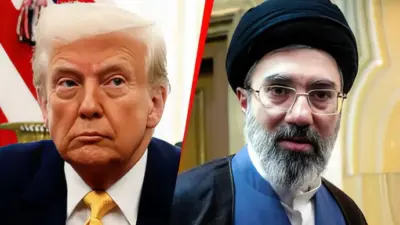

Washington: US President Donald Trump has said he will make a decision on Iran "very soon", warning that Tehran could face "the easy way or the hard way" as diplomatic efforts to end the eight-month conflict remain stalled.
Trump made the remarks on Saturday before leaving the White House for Ohio, where he was scheduled to campaign for Republican candidates ahead of the November midterm elections. He did not specify what decision he was considering, but his comments came as senior US national security officials reviewed options on Iran and tensions remained high across the region.
"We have a decision that I’ll make about Iran. Iran’s been decimated. So the only question is, it’ll either be the easy way or the hard way," Trump told reporters.
The remarks have renewed questions over whether Washington could resume major military operations against Iran if diplomatic efforts fail to produce an agreement.
Trump keeps options open on Iran
Trump did not provide details about what he meant by the "easy way" or the "hard way".
His comments came amid a wider US military and diplomatic buildup around the region. The administration has continued to keep military options available while pursuing negotiations aimed at ending the conflict.
Trump also said Iran was "virtually giving up" any plans to acquire a nuclear weapon. The US administration has repeatedly maintained that Iran must not be allowed to develop a nuclear weapon.
The latest comments followed several days of uncertainty over Washington’s next step. Trump had earlier declined to elaborate when asked about his intentions towards Iran, saying that a major announcement could follow.
The White House has not publicly announced a decision to resume large-scale attacks.
Senior US officials meet at Camp David
Trump’s latest warning came a day after senior members of his national security team held a meeting at Camp David to discuss Iran and the escalating conflict involving Saudi Arabia and the Houthis in Yemen.
According to Axios, Vice President JD Vance chaired the meeting, which was attended by Secretary of State Marco Rubio, Defence Secretary Pete Hegseth, special envoy Steve Witkoff, CIA Director John Ratcliffe and Joint Chiefs Chairman General Dan Caine. The meeting lasted several hours.
The discussions reportedly focused on US policy options as diplomatic efforts with Iran continued to make limited progress.
The White House has not disclosed whether the meeting resulted in any decision to resume military operations.
The timing of the meeting, however, has added to speculation about Washington’s next move, particularly as additional US military assets are being deployed to the region.
Military options remain on the table
The United States has continued strengthening its military presence in the Middle East while negotiations remain unresolved.
The USS Theodore Roosevelt carrier strike group and the USS Makin Island amphibious readiness group are heading towards the region, while other US naval forces are already deployed there, according to recent reports.
Defence Secretary Pete Hegseth has said the Pentagon is working to ensure Trump has a wide range of options available.
The deployment does not by itself establish that the United States has decided to launch another major offensive. Some movements could also involve routine replacement of forces that have spent months in the region.
However, the increased military presence gives US commanders additional options should Trump order an escalation.
The developments have also been accompanied by heightened security around critical infrastructure and shipping routes.
Iran prepares for possible renewed conflict
Iran is also preparing for the possibility that the United States could resume large-scale military operations.
According to Iranian officials and sources familiar with internal deliberations cited by Reuters, senior Iranian commanders have been examining options for a stronger response if the conflict resumes.
The planning reportedly includes potential responses that could extend beyond US military assets and involve countries supporting American operations.
Iran’s leadership has continued to pursue diplomacy, but officials have also been preparing for a renewed confrontation.
The possibility of another escalation has become particularly significant because of the Strait of Hormuz, one of the world’s most important energy and shipping routes.
Iran said on Sunday that the Strait would remain closed until the United States met conditions linked to an earlier agreement. Iranian officials have also said Tehran remains prepared to respond militarily if Washington resumes attacks.
Diplomatic efforts remain stalled
Despite the military preparations, a diplomatic channel between Washington and Tehran remains open.
Qatar has been acting as a mediator between the two sides, with recent contacts aimed at finding a framework to end the conflict and address the status of the Strait of Hormuz.
Recent talks, however, have produced little visible progress. The two sides remain divided over the terms for ending hostilities, reopening the waterway and addressing sanctions and Iran’s nuclear programme.
Iran has sought sanctions relief and other concessions as part of any agreement, while Washington has continued to demand restrictions relating to Iran’s nuclear capabilities.
The disagreement over sequencing has emerged as one of the key obstacles. Tehran has insisted that certain US commitments must come first, while Washington has sought assurances from Iran before providing broader concessions.
Iran’s nuclear programme remains a central issue
Trump’s latest remarks also focused on Iran’s nuclear ambitions.
The US President said Iran was effectively abandoning plans to acquire a nuclear weapon. However, the administration continues to insist that Tehran must not obtain such a weapon.
The issue has been central to the conflict and the subsequent diplomatic efforts.
Iran has consistently maintained that its nuclear programme is intended for peaceful purposes, while the United States and Israel have expressed concerns about the potential military applications of its nuclear capabilities.
Any agreement between Washington and Tehran is therefore expected to address the nuclear issue alongside sanctions and regional security concerns.
Strait of Hormuz adds to regional pressure
The continuing dispute over the Strait of Hormuz has added another major dimension to the conflict.
The waterway is a crucial route for global energy supplies, and restrictions on shipping have contributed to concerns over oil and fuel markets.
Recent reports have pointed to continued attacks and disruptions involving commercial vessels in the region. The United States has sought to maintain shipping access while increasing its military presence around the waterway.
Iran, meanwhile, has said the Strait will not reopen until conditions it has outlined are met.
The standoff has implications well beyond the United States and Iran because any prolonged disruption could affect energy supplies, shipping costs and regional economies.
War began with US and Israeli strikes in February
The current conflict dates back to February 28, when US and Israeli strikes triggered a major war with Iran.
Large-scale fighting continued for 40 days before a ceasefire took effect on April 8. Although the ceasefire brought an end to the most intense phase of the conflict, tensions and intermittent clashes have continued in the months since.
The conflict has also expanded into a wider regional confrontation involving shipping routes, Iran-backed groups and military operations in neighbouring areas.
The United States has since combined military pressure with sanctions and diplomatic efforts aimed at securing a longer-term settlement.
Iran, meanwhile, has faced substantial economic and military pressure while maintaining that it will respond to any renewed US attack.
What happens next?
Trump’s statement that he will make a decision "very soon" has placed renewed attention on Washington’s next move.
For now, there is no confirmed announcement that the United States has decided to resume major military operations against Iran.
Diplomacy remains active, with Qatar and other regional actors attempting to bridge differences between Washington and Tehran. At the same time, both countries are preparing for the possibility that negotiations could fail.
The immediate questions include whether a new diplomatic framework can be agreed, whether the Strait of Hormuz can be reopened and whether Washington will continue relying on economic and military pressure or order another major operation.
Trump’s "easy way or the hard way" warning has therefore added uncertainty to an already fragile situation. The coming days could determine whether the latest diplomatic efforts lead towards a new agreement or whether the conflict moves into another phase of confrontation.