
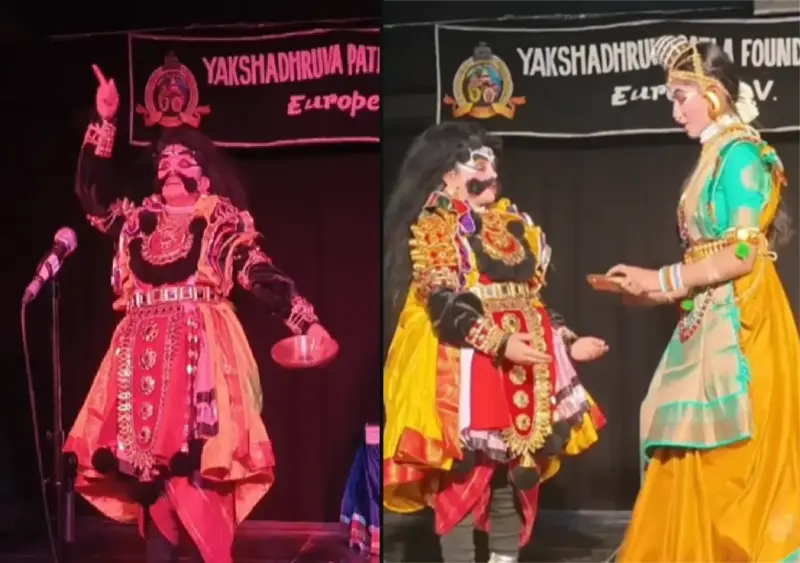

A recent video clip from a Yakshagana performance staged in Germany has offered a fascinating glimpse into how traditional Indian art forms are evolving beyond geographical and linguistic boundaries.
The performance features young artist Aadishesh portraying the mythological character Bhasmasura with remarkable skill, blending classical elements of Yakshagana with the German language.
The clip, which has drawn appreciation from art enthusiasts and cultural observers, highlights the adaptability of Yakshagana while retaining its core identity rooted in coastal Karnataka's rich heritage.
In the performance, Aadishesh takes on the role of Bhasmasura, a well-known figure from Hindu mythology. The character is famed for his boon from Lord Shiva, which ultimately leads to his downfall. The scene depicted in the clip revolves around Bhasmasura's cunning interaction with Shiva and Parvati, capturing a pivotal moment in the narrative.
Aadishesh's performance stands out for its expressive gestures, strong stage presence and rhythmic dialogue delivery—hallmarks of traditional Yakshagana. Despite performing in German, he maintains clarity, confidence and emotional depth, ensuring that the essence of the character remains intact.
Yakshagana, known for its elaborate costumes, vibrant makeup, and dramatic storytelling, has historically been performed in Kannada and related regional dialects. However, this German adaptation demonstrates how the art form can be reinterpreted for new audiences without losing its authenticity.
By delivering dialogues in German while adhering to classical performance techniques, Aadishesh exemplifies how young artists are pushing creative boundaries. His portrayal successfully balances intensity and subtle humour, making the performance accessible to a culturally diverse audience unfamiliar with the original language.
This experiment also underscores the flexibility of Yakshagana's narrative structure, which allows for reinterpretation while preserving its traditional framework of music, dance and dialogue.
In recent years, Yakshagana has gained international attention, with performances and workshops being Organized in countries across Europe and beyond. Cultural organisations and diaspora communities have played a significant role in promoting the art form on global platforms.
Germany, in particular, has seen a growing interest in Indian classical and folk arts, with collaborative productions introducing local audiences to forms like Yakshagana, Bharatanatyam and Kathakali. Such initiatives not only expand the reach of Indian culture but also foster cross-cultural understanding.
The German Yakshagana production featuring Aadishesh reflects this trend, showcasing how traditional art can be both preserved and innovatively adapted in a global context.
Experts believe that such adaptations are essential for the survival and relevance of traditional art forms in a rapidly changing world. By engaging younger generations and international audiences, artists ensure that these traditions continue to thrive.
At the same time, maintaining authenticity remains crucial. In Aadishesh's performance, the adherence to Yakshagana's core elements—body language, costume aesthetics and dramatic expression—demonstrates respect for tradition even while experimenting with language.
The German Yakshagana clip featuring Aadishesh as Bhasmasura is a compelling example of cultural fusion done right. It highlights how classical Indian art forms can transcend language barriers and geographical limits while preserving their essence. As Yakshagana continues to evolve and find new audiences worldwide, such performances reaffirm its enduring relevance and artistic richness.