
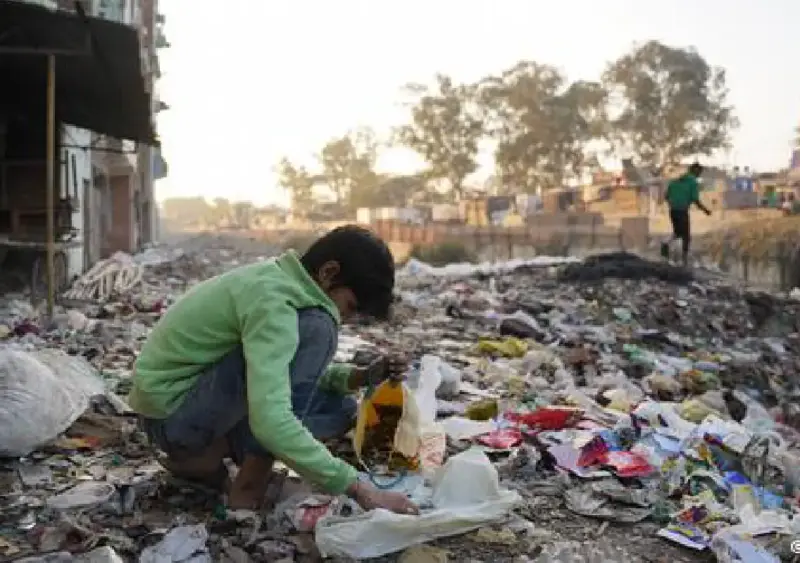

In the bustling streets near Mbare, young boys as young as six are collecting scrap metal to earn a few cents each day, highlighting the difficult realities of child labour in parts of Zimbabwe.
At the busy Siyaso Market, children often roam through discarded metal piles left by welders and fabricators. Early in the morning and after school, they gather items such as engine parts, metal cut-offs and copper or brass plates to sell to traders.
Eight-year-old Takudzwa Rapi says the boys usually avoid trouble, though stray dogs sometimes chase them while they search through rubbish heaps.
'We are mostly safe, and sometimes traders allow us to take scrap they no longer need,' he said.
After collecting scrap metal, the boys sell it to dealers in Mbare, who typically pay 10 to 20 US cents per kilogram, depending on the quality.
Pieces coated with brass or copper can earn them up to $1 for a small item, though such finds are rare.
The money helps the children buy food or basic household necessities for their families.
Despite these earnings, experts warn that the work exposes children to serious health and safety hazards.
Sharp metal edges, nails, contaminated waste and heavy loads can cause injuries or illness.
According to the International Labour Organization, hazardous child labour involves work that can harm a child's health, safety or development.
Zimbabwean law prohibits employment for children under the age of 16. However, poverty continues to push many families to rely on children's earnings.
A report by UNICEF estimates that about 138 million children worldwide are engaged in child labour, with sub-Saharan Africa carrying the largest burden.
In Zimbabwe alone, millions of children are believed to be involved in some form of labour.
Experts say poverty remains the main reason children enter such dangerous work.
Without strong social protection systems, families struggling with unemployment, illness or economic hardship often depend on children to contribute financially.
For the boys in Mbare, however, scrap collecting is also tied to hope.
They say they dream of finishing school and securing better jobs in the future—hoping that one day they will no longer have to search through metal heaps just to survive.