
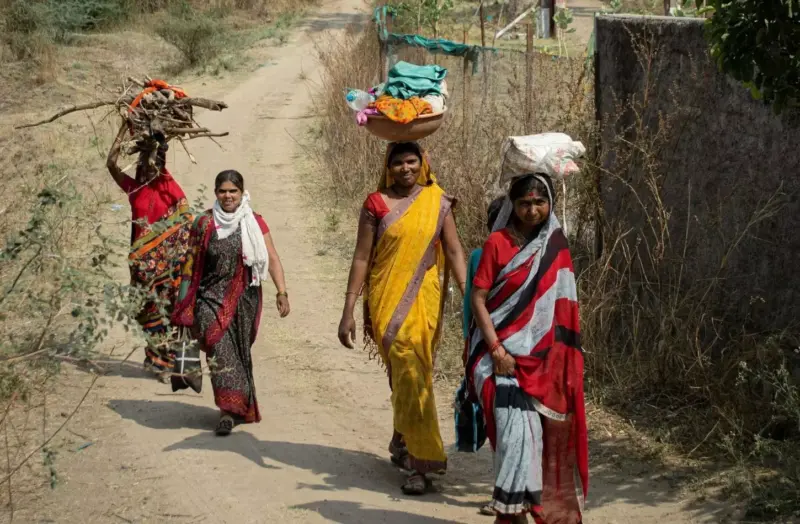

Hyderabad: Chenchu tribe, a Particularly Vulnerable Tribal Group (PVTG) who have called the Nallamalla forests their home for generations, is locked in a struggle against the state government over relocation.
Their fight is centered on the Amrabad Tiger Reserve, where the administration is attempting to relocate them, citing conservation goals.
In response, a new collective, the Chenchu Solidarity Forum (CSF), has been launched to amplify their voice and protect their ancestral habitat.
Who are the Chenchu Adivasis?
The Chenchus are one of India's oldest food-gathering communities. Their lives are deeply intertwined with the Nallamalla forest, relying on their vast traditional knowledge of medicinal plants, wild foods, and forest produce. They are not merely inhabitants; they are the traditional guardians of the Nallamalla ecosystem. Because of their unique socio-cultural significance, activists have long advocated for the region to be declared a 'Chenchu Conservation Bio-Reserve' to protect both the people and the biodiversity with which they have co-existed for centuries.
Why are they fighting relocation?
The government has introduced a 'Relocation package' for residents within the Amrabad Tiger Reserve. However, the Chenchu community argues that this process is fundamentally flawed and unjust for several reasons:
Lack of Consent: The community claims there has been no proper consultation or informed consent from their Gram Sabhas, as mandated by law.
Loss of Rights: Relocation would push them outside the Schedule-V areas, meaning they would lose all constitutional safeguards, including rights under PESA (Panchayats Extension to Scheduled Areas Act) and the Forest Rights Act (FRA).
Cultural Disconnect: Tribal leaders argue that money and land elsewhere cannot replace the forest that has sustained them for generations. Many fear that compensation will be squandered, leaving them as landless wage laborers, similar to what happened in the Kawal Tiger Reserve.
Coercion: The community reports intimidation tactics, including the filing of fabricated criminal cases against youth leaders and the use of "petty jobs" to pressure families into giving consent.
What is the Outcome and Key Demands?
The Chenchu Solidarity Forum (CSF) is demanding a shift away from the "inviolate forest" model toward a lawful co-existence model, where communities participate in forest governance. Their core demands to the Telangana government include:
Immediate Halt: Stop the issuance of cheques and the unconstitutional forced relocation process.
Legal Compliance: Full implementation of the Forest Rights Act and recognition of Community Forest and Habitat Rights.
Transparency: The Forest Department must publicly provide scientific proof that the Chenchus are causing 'irrevocable damage' to wildlife, as required by law.
Justice: Withdrawal of all false criminal cases against Chenchu youth and community leaders.
As of now, the CSF is pressing for the declaration of the Nallamalla region as a 'Chenchu Conservation Bio-Region Reserve.' They maintain that the most sustainable form of climate protection and conservation is to empower the adivasis to remain in their forests, governing their future through democratic, community-centered mechanisms.