




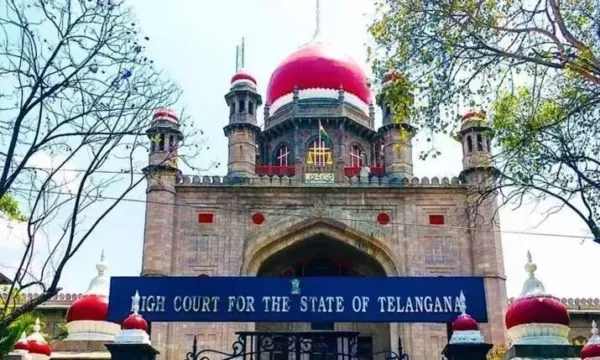

Hyderabad: Telangana High Court has cleared the way for a criminal trial of a man who allegedly issued a cheque without sufficient balance to cover his son's mounting medical expenses.
Justice N Tukaramji dismissed a petition to quash the case, asserting that the legality of the debt must be decided in court rather than dismissed prematurely.
The Background: A ₹1.33 Crore Medical Bill
The legal battle stems from a prolonged medical emergency. Between July 2022 and January 2023, the son of Ch Venkat Reddy, a resident of Kushaiguda, underwent extensive treatment at Continental Hospitals in Gachibowli.
By the end of the treatment, the total bill reached a staggering ₹1.33 crore. While the family made several partial payments, an outstanding balance of over ₹55 lakh remained. To cover a portion of this debt, Reddy issued a cheque for ₹15 lakh from his proprietary firm. However, the hospital was unable to collect the funds as the cheque was returned with the instruction: "payment stopped by drawer."
Legal Arguments: The Defense vs. The Act
Venkat Reddy approached the High Court seeking to quash the proceedings under Section 138 of the Negotiable Instruments (NI) Act, raising several technical and legal objections:
Limitation Period: The petitioners argued the complaint was filed too late and that a second statutory notice should not have triggered a fresh cause of action.
Contractual Privity: They contended there was no direct contract between Reddy's business firm and the hospital.
No Enforceable Debt: The defense claimed the hospital's demand did not constitute a "legally enforceable debt."
The Court's Verdict: Presumption of Liability
Justice Tukaramji rejected these arguments, citing established Supreme Court precedents. The Court clarified several key points of law:
Multiple Presentations: Drawing from the MSR Leathers case, the Court noted that a cheque can be presented multiple times during its validity. Each dishonor creates a fresh cause of action, provided the legal notices are served correctly.
"Stop Payment" is Dishonor: The Court reaffirmed that a "stop payment" instruction is legally equivalent to having "insufficient funds."
The Burden of Proof: Under Section 139 of the NI Act, once a cheque is signed and issued, the law presumes it was for a debt. It is then up to the accused to prove otherwise during a full trial.
Proprietor Liability: The Court dismissed the idea that the business firm was separate from the individual, ruling that a proprietor is personally liable for cheques issued by their concern.
"The issues raised involve mixed questions of fact and law that necessitate a full trial," Justice Tukaramji noted, declining to use the Court's inherent powers to stop the case.
The High Court's refusal to quash the petition means the criminal proceedings will continue in the lower trial court. While Reddy retains the right to present his defense and contest the hospital's billing practices during the trial, he must now face the standard legal process governing dishonored cheques.