

Even as Mumbai adjusts to the renaming of its local railway stations, the larger debate over colonial-era nomenclature has now reached one of the city's most iconic public institutions.
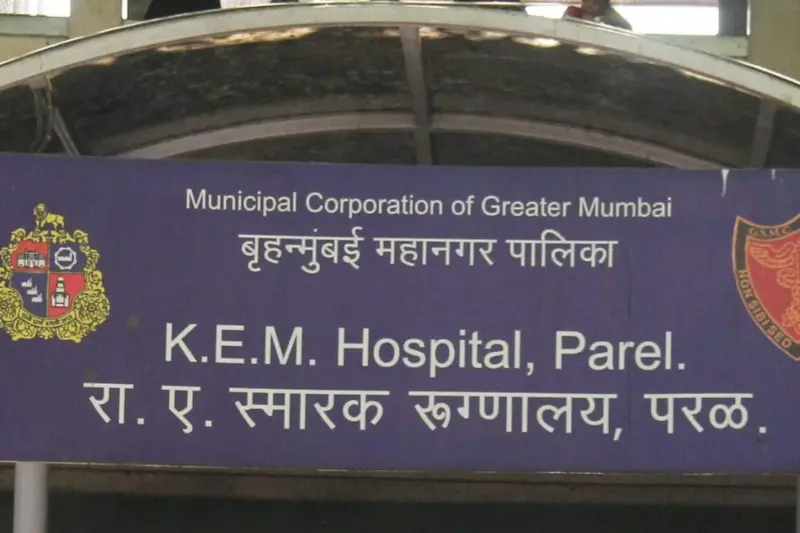
Cabinet Minister Mangalprabhat Lodha on Wednesday suggested that the Brihanmumbai Municipal Corporation (BMC) should consider changing the 'King Edward' name of KEM Hospital, arguing that symbols of British rule have little relevance in present-day India.
Speaking to reporters after the centenary celebrations of KEM Hospital and Seth Gordhandas Sunderdas Medical College in Mumbai, Lodha said that despite India completing 75 years of Independence, remnants of colonial identity continue to exist in prominent public spaces. "King Edward has no connection with our history or our people. The name represents a period of slavery. Whether it can be changed is something the municipal administration should seriously think about," he said, making it clear that the final call would rest with the BMC.
The minister's remarks come at a time when the state government has backed the renaming of several railway stations in Mumbai, replacing anglicised names with ones rooted in local geography and Marathi usage. Political observers see the KEM suggestion as a natural extension of that policy, signalling that the renaming drive may not remain limited to transport infrastructure alone.
Lodha also underlined that the hospital already carries the legacy of Seth Gordhandas Sunderdas, a name closely associated with philanthropy and medical education in Mumbai. "That legacy deserves to be foregrounded, not overshadowed by a colonial tag," he remarked.
Beyond the politics of names, the minister used the occasion to flag concerns around patient services and the future direction of public healthcare. He called for greater use of artificial intelligence in diagnosis and treatment, especially in complex cases, and suggested creating global telecommunication linkages that would allow doctors in Mumbai to consult international experts in real time.
He further stressed the need for integrated health facilitation centres within hospitals, enabling patients to access government schemes, treatment details, medicines and diagnostic information at a single point. Digital help desks, Lodha said, would reduce confusion, repeated paperwork and the stress faced by patients' families.
Hospital Dean Dr Sangita Rawat briefed attendees on future expansion and service improvement plans, while several senior officials and public representatives were present at the event.