
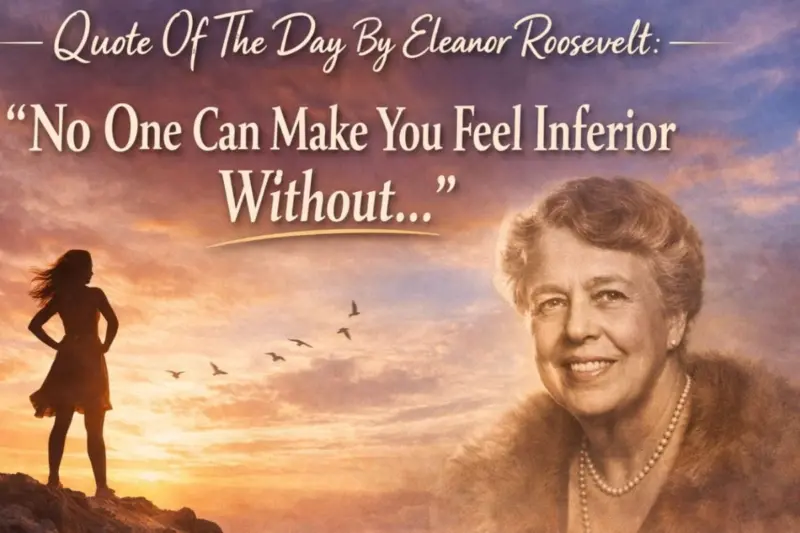

Quote Of The Day By Eleanor Roosevelt: "No One Can Make You Feel Inferior Without Your Consent."
This quote doesn't offer comfort the way a pep talk does.
It offers clarity that is almost a dare. Eleanor was the longest-serving first lady of the United States, during her husband Franklin D. Roosevelt's four terms as president from 1933 to 1945. She was also a champion of human rights.
It asks you to look closely at a feeling most of us carry quietly: that small, sinking sense of not being enough. Not smart enough in the meeting. Not interesting enough at the dinner table. Not successful enough when scrolling through other people's lives. Roosevelt's line suggests something unsettling - that inferiority isn't handed to us fully formed. It's assembled, piece by piece, when we accept certain judgments as facts.
The world, of course, is generous with opinions. People will interrupt you, overlook you, underestimate you, or speak to you as though they know your limits better than you do. None of that is imaginary. But what the quote separates very cleanly, is impact from ownership. Someone can aim a remark at you. You decide whether it gets to live inside you.
Consent here is rarely dramatic. It doesn't look like saying "yes, I agree I'm inferior." It looks like replaying a comment long after it was said. It looks like shrinking yourself preemptively. It looks like not applying, not speaking up, not trying, just in case someone confirms the fear you already half-believe.
 Quote Of The Day By Eleanor Roosevelt: "No One Can Make You Feel Inferior Without…"
That's why this quote still feels relevant. We live in a time that monetises insecurity. Algorithms reward comparison. Confidence is packaged as performance, and self-worth is often measured in visibility. In such a climate, feeling inferior can seem almost logical. Inevitable, even.
But Roosevelt's words push back against that inevitability. They don't deny injustice or cruelty. They don't pretend power dynamics don't exist. What they do is insist on one private territory that remains yours: how you see yourself when no one else is speaking.
Refusing consent doesn't mean you're untouched by criticism. It means you don't let every external voice outrank your own. It means recognising that discomfort isn't the same as truth, and rejection isn't the same as worth.
The quote endures because it offers something rare: responsibility without blame. Power without denial. It reminds you that dignity isn't something you earn by being flawless. It's something you protect by being discerning.
Not every opinion deserves your agreement. Not every judgment deserves a home. And not every moment of doubt needs your signature at the bottom.