
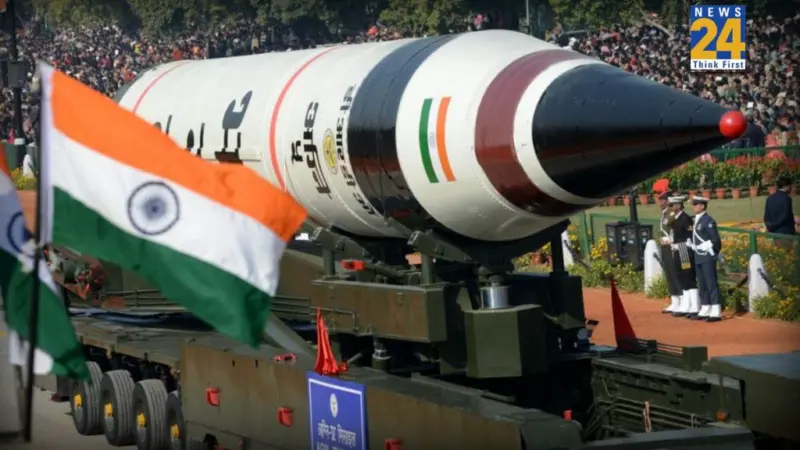

Missiles have redefined modern warfare in way that perhaps no other weapon has in the modern age. But did you know that missiles are among the most complex and expensive military hardware, and each missile costs a small fortune to manufacture?
How much do missiles cost?
The cost of a missile varies according to factors such as range, speed, guidance technology, payload, and whether the missile is intended for attack or defense.
Short-range missiles designed as interceptors like India's indigenous Akash missile costs Rs 2 crore per unit, while the BrahMos supersonic cruise missile, known for its speed and accuracy, can can cost anywhere between Rs 25 crore to Rs 35 crore, depending on the the variant.
However, strategic missiles like India's Agni 5 intercontinental ballistic missile, and US' Trident ballistic missile are among the most expensive, with each unit of Agni-5 missile costing about Rs 500 crore, while the cost of a single Trident missile can go up to Rs 750 crore.
Strategic missiles are even more expensive. India's Agni 5 intercontinental ballistic missile is estimated to cost approximately ₹50 crore (approximately $500 million USD). Globally, some missiles are much more expensive. America's Trident ballistic missile costs approximately ₹750 crore (approximately $750 million USD USD).
Why are missiles expensive?
The costliest component of a missile is also its most crucial, the warhead, which is housed in a specially-designed casing that ensures the payload remains safe and stable till detonation.
The nose cone of a missile is typically made of ceramic or heat-resistant composite material, which is another expensive component, pushing the cost of single missile from a few crore rupees to several hundred, depending upon the range, role and other features of the projectile.
Notably, while some missiles might look small to the layman, they are a combination of aerospace engineering, advanced electronics, precision manufacturing, and high-grade materials into a single weapon system, making the most expensive weapons on earth.
What materials are used in a missile?
The airframe or outer casing for the missile is made out of aluminum alloys, while Titanium, magnesium alloys, and maraging steel are added to enhance the ability to withstand high stress and heat, making the missile highly-durable but lightweight.
Some modern missiles also rely heavily on composite materials, such as carbon-carbon composites and fiber-reinforced plastics for added durability while reducing weight.
Notably, a missile's guidance system is its most technologically sensitive component, consisting of an onboard computer, gyroscopes, accelerometers, radar seeker, infrared sensors, and a satellite navigation unit.