
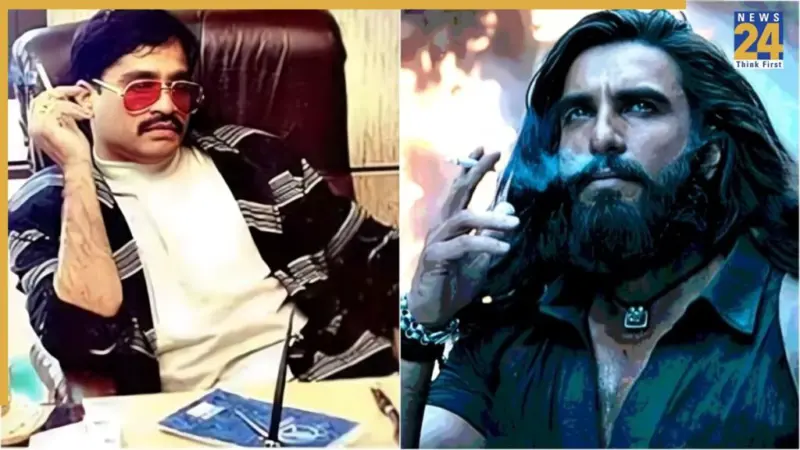

Dreaded underworld don and India's most-wanted terrorist, Dawood Ibrahim, is back in the headlines after Aditya Dhar's Dhurandhar 2 released in theatres on Thursday, reviving the mystery surrounding the notorious gangster who orchestrated some of the worst terror attacks in India, including the 1993 Mumbai serial blasts.
How Dhurandhar 2 revived Dawood Ibrahim mystery?
While Dawood Ibrahim is not directly named in the film, it is heavily implied that the mysterious "Bade Sahab" is indeed the fugitive underworld don, operating from the shadows and directing the operations of Pakistan's notorious ISI spy agency.
In Dhurandhar 2: The Revenge, the bade sahab character, played by theatre actor Danish Iqbal, is set up as the man pulling the strings behind the scenes, though he is portrayed as a frail, sickly and bed-ridden old man who operates from a Karachi "White House".
The movie sets up bade sahab as the mastermind of deadly terrorist attacks in the 1993-2008 era, which includes the 1993 Mumbai serial blasts, heavily implying that the character is based on dreaded gangster Dawood Ibrahim.
How Dawood Ibrahim ran Mumbai underworld from Dubai?
Dhurandhar 2 has rekindled interest in a mystery dating back to the early 1990s, when Dawood Ibrahim fled India after the 1993 Mumbai blasts, purportedly with Pakistan's backing. Since then, there have been several reports suggesting that the UN-sanctioned terrorist has died, though his death has never been officially confirmed.
Well before he fled India in 1993, Dawood Ibrahim had set up shop in Dubai, and directed the operations of his Mumbai-based criminal underworld network, D-Company, from the Emirati city. The gangster roamed in plain sight and lived in a lavish palatial house in Dubai, where he often threw opulent parties attended by top Bollywood stars of the era.
Ibrahim was often seen publicly enjoying India-Pakistan cricket matches in Sharjah, but UAE authorities were forced to act under pressure after he perpetrated the Mumbai serial blasts which killed hundreds and wounded thousands others in India's financial capital.
Sometime around 1994, Dawood Ibrahim left Dubai and took refuge in Pakistan's Karachi, and even though Islamabad has repeatedly denied sheltering the gangster, despite several sightings and credible reports, its own paperwork contradicts that denial.
Is Dawood Ibrahim dead or alive?
According to the UN Security Council Consolidated List dated June 11, 2025, Dawood Ibrahim has three addresses in Pakistan; White House, Near Saudi Mosque, Clifton, Karachi; House Number 37, 30th Street, Defence Housing Authority, Karachi; and a bungalow in the hills of Noorabad, Karachi.
In August 2020, Islamabad, under pressure from the Financial Action Task Force (FATF) was forced to ban 88 individuals and entities in compliance with the UNSC list. The notification included the name of Dawood Ibrahim, his multiple aliases and Pakistani passports, as well as his several addresses in Karachi, including the "White House" mentioned in Dhurandhar 2.
Therefore, its safe to assume that Dawood Ibrahim was alive and living Karachi, at least till late August 2020, and while several reports of his purported death have emerged since, none of these have been confirmed.
What UN says about Dawood Ibrahim?
According to the UN Security Council, Dawood Ibrahim Kaskar has used his criminal underworld network to support terrorist organizations like the Al-Qaeda, and runs a narco-terror empire which ships vast amounts of narcotics via smuggling routes from South Asia, the Middle East and Africa using Al-Qaeda's global terror network.
The US declared Dawood Ibrahim a Specially Designated Global Terrorist in 2003, and the UNSC's Al-Qaeda and Taliban Sanctions Committee has since November 2003 listed him as an individual associated with Al-Qaeda.
The UNSC listing led to the freezing of Dawood Ibrahim's assets, as well as a travel ban and an arms embargo adopted under Chapter VII of the UN Charter. Pakistan, being a UN member states is obligated to comply with the resolution.
What India told UN about Ibrahim's role in Mumbai blasts?
In August 2020, India's ambassador to the United Nations told the UNSC High-Level Debate that Dawood Ibrahim's D-Company started out as a gold smuggling and counterfeit currency racket, but transformed into a terrorist entity when it orchestrated the 1993 Mumbai serial blasts that killed more than 250 people.
The Indian envoy, without directly naming Pakistan, told the Council that the perpetrator of the 1993 Mumbai blasts "unsurprisingly continues to enjoy patronage in a neighboring country, a hub for arms trafficking and narcotics trade, along with other terrorists and terrorist entities that have been proscribed by the United Nations."