

The boundaries between traditional product management and technical architecture have blurred considerably in recent years. Modern technology platforms require leaders who understand not only customer needs and market dynamics but also the underlying systems architecture that enables digital experiences at scale.
This convergence of business strategy and technical implementation creates opportunities for professionals who can navigate both domains fluently, translating user requirements into platform capabilities while ensuring that technical decisions align with broader organizational objectives. The most impactful product managers in today's technology landscape are those who combine customer empathy with systems thinking, regulatory awareness with an innovation mindset, and strategic vision with operational excellence. These capabilities distinguish individuals who simply manage features from those who shape platform evolution.
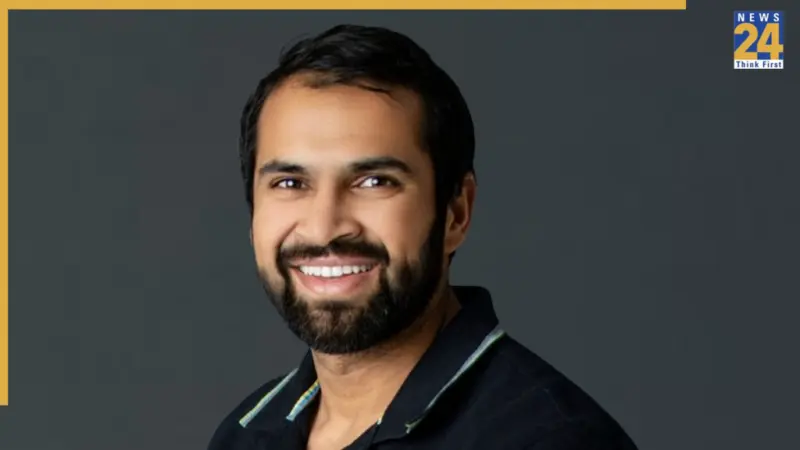
Archit Sood exemplifies this integrated approach to technology leadership. His current role at Microsoft involves ownership of core Windows platform services that enable secure data synchronization, backup, and cross-device continuity for users worldwide. The complexity of these responsibilities becomes apparent when considering the scale at which these services operate.:
They must function reliably across diverse hardware configurations, network conditions, and usage patterns while maintaining strong encryption and customer trust during device transitions and recovery scenarios. The platform services he leads represent critical infrastructure that users depend upon, even if they remain largely invisible during normal operation. This type of foundational platform work requires someone who understands both the technical architecture enabling these capabilities and the business imperatives driving investment decisions. His ability to communicate strategy, technical trade-offs, and risk assessments to senior leadership influences how Microsoft allocates resources toward Windows security, compliance, and customer experience goals.
Platform product management has emerged as a distinct discipline within technology companies, requiring different competencies than traditional consumer product roles. While consumer products focus on visible features and direct user interactions, platform products enable capabilities that other teams and products build upon. Success in platform roles requires understanding how technical decisions create constraints or opportunities for downstream developers, how architectural choices influence long-term scalability, and how platform capabilities must evolve to support changing business models. Industry analysis suggests that effective platform product management represents a critical competitive advantage for technology companies, enabling faster innovation cycles, better resource utilization, and stronger ecosystem development. The professionals who excel in these roles typically possess backgrounds that combine hands-on technical experience with strategic business thinking, allowing them to bridge conversations between engineering teams focused on implementation details and executive leadership focused on market positioning.
Archit's professional journey reflects this blend of technical depth and strategic perspective. His role at AT&T involved developing a wireless sales product strategy that resulted in measurable improvements in both sales performance and customer satisfaction, demonstrating his ability to connect product decisions to business outcomes. The analytics dashboards and key performance indicators he built enabled teams to monitor digital sales adoption and service stability, providing visibility into how product changes influenced operational metrics. His program management work at Amazon focused on efficiency optimization within the North America transportation network, where he conducted advanced SQL tuning on large-scale data systems and built executive dashboards in Tableau that measured network health and shipment placement effectiveness. These experiences across retail operations, wireless telecommunications, and enterprise platforms provided him with a comprehensive understanding of how data-driven insights inform strategic decisions across different business contexts.
His earlier work at Wi-Tronix illustrates how analytical capabilities translate into product innovation. While leading the development of data analytics and visualization solutions based on large-scale fleet telemetry data, he designed new performance metrics and analytical models that created capabilities previously unavailable to rail and transportation customers. This work involved translating raw telemetry data into actionable insights that enabled operators to optimize fleet movement, fuel efficiency, and route planning. The competitive benchmarking and customer analysis he conducted identified product differentiation opportunities that directly influenced roadmap prioritization, showing how customer insights combined with technical capabilities drive product innovation. Earlier in his career, his systems engineering work at Infosys focused on business process re-engineering initiatives that reduced cycle time and operational costs by seventy-five percent, demonstrating his ability to identify inefficiencies and design improved workflows.
The regulatory compliance initiatives he has led at Microsoft represent increasingly critical capabilities for technology platforms operating across multiple jurisdictions. Partnering with legal, privacy, security, and engineering teams, he designed compliant consent mechanisms, data minimization approaches, portability features, and deletion experiences that address regulatory requirements while maintaining platform functionality. This work requires managing competing demands: users expect seamless experiences while regulators require explicit consent flows; businesses seek comprehensive data insights while privacy frameworks mandate minimization; platform economics depend on data-driven personalization while regulations require deletion capabilities. Navigating these tensions successfully requires someone who understands not only the technical implementation but also the regulatory context, business implications, and user experience considerations. The platform modernization efforts he drives involve transitioning legacy infrastructure to cloud-native architectures, improving scalability and reliability while positioning the platform for future capabilities.
His research background in sentiment analysis and natural language processing demonstrates engagement with advanced analytical techniques. The research paper he co-authored during his graduation program examined the performance of different algorithms for categorizing social media content, including a comparison of Stanford Natural Language Processing tools, SentiWordNet approaches, and part-of-speech tagging methods. The research found that part-of-speech tagging improved accuracy to approximately fifty-six percent compared to baseline approaches, contributing insights about how preprocessing and feature selection influence sentiment classification results. This research experience reflects his ability to approach problems analytically, evaluate different methodological approaches, and communicate findings effectively through academic publication. His Project Management Professional certification and Tableau Desktop qualification reflect continued investment in professional development and mastery of tools essential for modern product management practices.
Technology platforms benefit significantly from leaders who combine technical understanding with strategic judgement. The systems underpinning modern digital experiences require continuous evolution in response to changing user expectations, competitive pressures, and regulatory requirements. Professionals who can navigate technical complexity while maintaining strategic focus create value that extends beyond individual features or releases, shaping platform trajectories that influence how millions of users experience technology. When this expertise develops within domestic technology ecosystems, it strengthens organizational capabilities, creates mentorship opportunities for emerging talent, and enhances the competitive positioning of companies operating in global markets. The intersection of platform product management, security architecture, and regulatory compliance represents a domain where specialized expertise drives substantial organizational impact.