





Cars are no longer just mechanical machines, June 9th, 2026, at PUNE. A contemporary car consists of many millions of lines of software, dozens of electronic control units, wireless connections, links to mobile applications, cloud services, charging systems, and, a lot more recently, advanced driver-assistance systems.
The auto sector is shifting from 'Can this vehicle run safely?' to 'Can this vehicle be kept secure throughout its life?'.
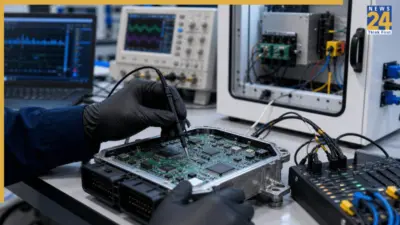
This change is paving the way for a new kind of infrastructure for the automotive sector - automotive cyber resilience labs. These labs enable manufacturers, suppliers, and testing bodies to look into how a vehicle reacts to digital systems testing in a controlled environment. The goal is not to instill fear in the minds of people that their vehicles are susceptible to hacking, but to ensure that industry develops more secure, robust, and reliable mobility solutions before vehicles reach customers.
Founded in 2015 by cybersecurity researcher and entrepreneur Vikash Chaudhary, HackersEra Automotive Cyber Security Pvt. Ltd. is an Indian firm working on creating leadership in the field and has established an Automotive Cyber Resilience Lab that conducts tests on connected, electric, and software-defined vehicles on the entire attack surface of the vehicle.
It is available now and is being sold as a product for more widespread use by OEMs, Tier-1 suppliers, testing labs, homologation environments, and programs for regulatory readiness. The lab supports teams to repeatably test vehicle networks, wireless interfaces, RF systems, cellular, V2X, EV charging infrastructure, embedded hardware and firmware, and side channels and ADAS-related systems.
Why Vehicle Cybersecurity Is Becoming Important
The auto industry is going through one of its biggest technology changes in decades. Vehicles now include infotainment systems, telematics units, digital keys, over-the-air software updates, connected mobile apps, EV charging communication and driver-assistance sensors. Each new digital feature improves convenience, safety or performance, but it also adds a new area that must be tested and secured.
Global regulations are also pushing the industry in this direction. UN R155 and UN R156 have brought cybersecurity management and software update management into the vehicle approval conversation in several markets. ISO/SAE 21434 has become an important engineering standard for road vehicle cybersecurity. In India, the expected AIS 189 and AIS 190 framework is set to make automotive cybersecurity a more formal part of the compliance and type-approval journey.
For Indian OEMs and suppliers, this is not only a compliance challenge. It is also an opportunity. As India grows in electric mobility, connected vehicles and automotive exports, cybersecurity capability can become a competitive advantage for the country's auto ecosystem.
From Testing Service To Lab Infrastructure
HackersEra's strategy is built around a simple idea: automotive cybersecurity should not be limited to one-time audits. Vehicles need structured testing during design, validation, production, and post-market operation.
The company's cyber resilience lab brings this approach into a physical and repeatable setup. Instead of testing one component in isolation, the lab is built to support both vehicle-level and component-level cybersecurity validation. It covers in-vehicle networks such as CAN, CAN-FD, LIN, FlexRay, and Automotive Ethernet; external interfaces such as Wi-Fi, Bluetooth, BLE, NFC, and USB; RF systems such as key fob, TPMS, GNSS, and broadcast receivers; cellular systems; V2X; EV charging; hardware debug interfaces; side-channel testing; firmware analysis; and ADAS-related sensor and fusion systems.
For non-technical readers, this means the lab is designed to examine the many digital doors through which a modern vehicle communicates with the outside world, other vehicles, infrastructure, charging networks, and service systems.
"Automotive cybersecurity is moving from document-based compliance to evidence-driven validation. OEMs and suppliers now need repeatable infrastructure that can test the full vehicle attack surface and generate engineering evidence for compliance, safety and product teams," said Vikash Chaudhary, Founder and CEO of HackersEra.
India's Role In The Global Vehicle Security Market
India has a strong opportunity to become a global center for automotive cybersecurity. The country already has deep automotive manufacturing capability, a large engineering talent base, and a fast-growing EV and connected mobility market. What is now needed is a specialized vehicle security capability that understands both Indian market realities and global standards.
HackersEra says it has worked with more than 25 OEM clients across seven countries, completed over 600 projects, and tested more than 200 ECU models. The company also says it has built more than 50 automotive security testing labs across markets, including Germany, the United States, Japan, China, and India.
These numbers matter because cybersecurity in vehicles is different from regular enterprise IT security. A banking system, a mobile app and a vehicle ECU all need security, but the testing logic is very different. In a vehicle, security must work within strict timing, safety, hardware, and regulatory constraints. A change that looks simple in software may affect diagnostics, braking, steering, battery management, telematics or over-the-air update behavior.
This is why dedicated vehicle cybersecurity labs are gaining importance. They give engineering teams a controlled environment to find weaknesses, validate fixes, train internal teams, and prepare evidence for customers, auditors and regulators.
What The Lab Could Mean For OEMs And Suppliers
For OEMs, the biggest benefit is readiness. A cyber resilience lab can help teams test vehicles and components before launch, prepare for regulatory reviews and reduce dependence on scattered, one-off testing exercises. For Tier-1 suppliers, it can help prove that their ECUs, telematics units, chargers, gateways, sensors and software modules meet the expectations of global vehicle programs.
For testing labs and homologation bodies, the value is standardization. As vehicle cybersecurity becomes part of the approval and assurance process, repeatable testing infrastructure can help create clearer evidence, faster review cycles and stronger confidence in the results.
HackersEra is also tying the lab approach to a broader product portfolio that includes compliance automation, vehicle security operations, in-vehicle protection and security testing tools. The company's stated mission is to secure one billion connected vehicles, a goal that reflects both the scale of the connected mobility shift and the seriousness with which the industry is beginning to treat cybersecurity.
A Reassuring Shift For Consumers
For vehicle owners, the rise of automotive cybersecurity should be seen as a positive development. The connected car is here to stay. Digital keys, mobile apps, navigation, EV charging, ADAS, OTA updates and smart fleet services will only grow. The right response is not to avoid technology, but to build stronger security into it.
India's automotive sector has already shown that it can compete globally in manufacturing, software and engineering services. If companies, regulators, testing bodies and suppliers now work together on cybersecurity, India can also become a serious global contributor to safer connected mobility.
As vehicles become more digital, cyber resilience will become as important to the future of mobility as crash testing, emissions testing and functional safety. The companies that build this capability early will not only meet regulations. They will help define trust in the next generation of vehicles.