
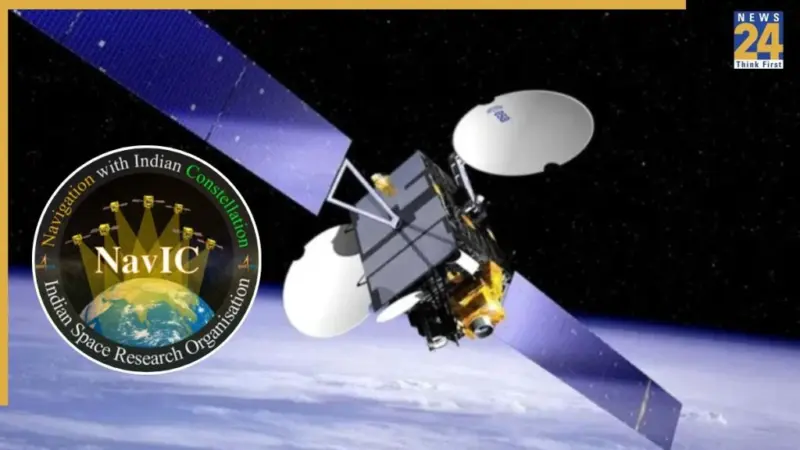

In a major blow to India's indigenous NavIC navigation system, only three of its 11 satellites are currently operational, posing a serious threat across various fields ranging from military navigation, shipping, missile guidance, and precision strike capabilities of Indian armed forces.
NavIC requires a minimum of four satellites to function, but only three are currently functional, according to reports.
What is NavIC?
Developed after the 1999 Kargil War, when the United States refused to provide GPS services to India which hampered Indian Army's navigation and precision strikes in the Himalayas, NavIC (Navigation with Indian Constellation) is India's indigenous navigation system designed to provide accurate real-time positioning and timing services.
Initially named the Indian Regional Navigation Satellite System (IRNSS), it was later renamed NavIC (sailor or navigator in Indian languages), and provides positioning, navigation, and timing services within India and its 1,500-km surrounding region.
ISRO launched IRNSS satellites between 2013-2018, and the system currently consists of a constellation of eight satellites, with two additional satellites on ground as stand-by.
Unlike US' Global Positioning System (GPS), China's BeiDou, European Galileo, and Russia's GLONASS which operate globally, NavIC is exclusive to India, though plans are in place to expand its range to 3,000 km in coming years.
What triggered NavIC crisis?
The current woes faced by NavIC stems from multiple failures of first-generation satellites launched by ISRO. The national space agency had launched initially launched nine satellites, out of which eight were successfully placed in the low-earth orbit.
However, five of the satellites (IRNSS-1A, 1C, 1D, 1E, and 1G), suffered failures in all three atomic clocks, essentially rendering them useless as atomic clocks are required for precise positioning and timing services.
Currently, only three satellites (IRNSS-1B, 1F, and 1I) remain functional. IRNSS-1B is 11 years old, while the last atomic clock of IRNSS-1F also failed on March 13, and the satellite will now only be able to provide messaging services, not navigation, ISRO said.
Learning from the failures of 1st-gen satellites, ISRO launched the NVS series (second generation) with the launch of NVS-01 in May 2023, while NVS-02- launched in January 2025- is unable to provide navigation services as it was trapped in an incorrect orbit.
According to ISRO, NavIC requires five NVS satellites, but only is currently operational as the launch of several NVS satellites faced multiple delays.
Why NavIC failure is a major threat?
The trouble faced by the NavIC system could have wide ranging impacts across various fields, especially in defense as military navigation and missile guidance will be drastically hit, reducing India's precision strike capabilities.
Additionally, without NavIC, it would be extremely difficult to track the real-time location of military assets such as warships and aircraft as well as movement of ground troops.
This would force the India armed forces to use navigation systems of other countries such as GLONASS or GPS, which these countries may choose to disable in times of war, posing a major challenge to India's national security.