
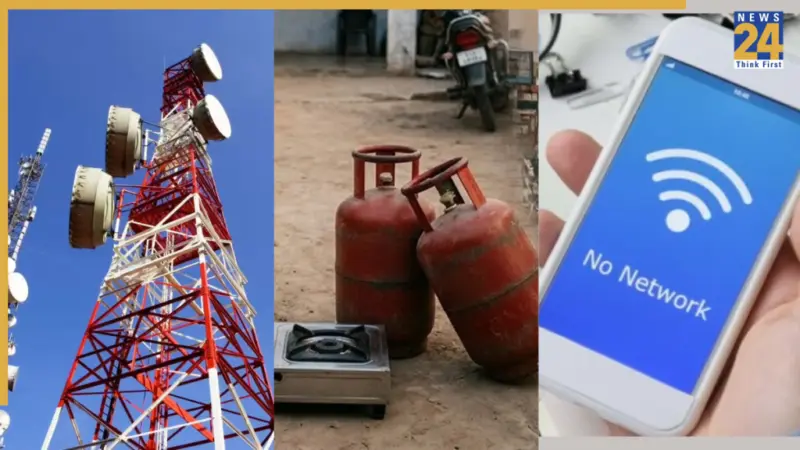

Concerns over cooking gas supply in India are beginning to reach beyond households and kitchens. The telecom sector has raised an alert that a shortage of LPG could disrupt the production of telecom towers, which are essential for running mobile networks and internet services across the country.
Industry representatives say that if the situation continues for a long time, it may slow down the expansion of network infrastructure.
In recent weeks, worries about LPG availability have grown due to global supply disruptions linked to the ongoing conflict in the Middle East. While domestic consumers are currently being given priority for gas supply, several industries that rely on LPG are facing difficulties.
Telecom Companies Say LPG Supply Stopped
Companies involved in building telecom infrastructure have informed the government that the LPG supply they depend on has suddenly been halted. According to industry reports, several telecom tower manufacturing units have not received LPG since March 5, 2026.
The government has reportedly instructed oil companies to prioritise domestic households when distributing LPG. As a result, many industrial users, including telecom tower manufacturers, are struggling to secure enough gas to keep their operations running normally.
Industry officials say the sudden halt in supply has created uncertainty for factories that build equipment used in telecom networks.
Why Telecom Tower Production Needs LPG
LPG plays an important role in the manufacturing process of telecom towers. One key step is galvanization, a technique used to coat metal parts with a protective layer to prevent rust and corrosion. This process often requires gas-based fuel such as LPG.
If the fuel supply remains limited, factories may have to slow down production or temporarily shut down some units. This could directly affect the number of new towers being manufactured and installed across the country.
Possible Impact on Mobile Network Expansion
India's mobile network relies heavily on telecom towers. Millions of users depend on these towers every day for voice calls, mobile data, and internet access. Telecom companies regularly add new towers to improve coverage and expand network capacity.
If tower production slows down, the rollout of new infrastructure may also be delayed. This could particularly affect areas where connectivity is already weak and where additional towers are needed to improve service.
Industry experts say this situation may also impact future network upgrades, including the expansion of next-generation mobile services.
Telecom Industry Urges Government Action
Telecom industry bodies have appealed to the government to recognise digital infrastructure as a critical service. They have requested that LPG supply for tower manufacturing units be given priority so that network expansion work can continue smoothly.
Industry groups argue that India is moving rapidly toward a digital economy, and any disruption in telecom infrastructure could affect communication, business operations, and digital services used by millions of people.
No Immediate Threat to Mobile Services
Experts say there is currently no immediate danger of mobile networks or internet services shutting down. However, if LPG shortages continue for a longer period, the pace of new tower installations and network upgrades could slow down.
This may eventually affect connectivity improvements and the speed at which telecom companies expand their services.
Other Businesses Also Feeling the Pressure
The LPG shortage is not affecting only the telecom sector. Reports from cities such as Delhi, Mumbai, and Bengaluru indicate that hotels, restaurants, and small businesses are also facing problems due to limited commercial LPG supply.
India imports a large share of its LPG requirements, and any disruption in global supply chains specially in the Middle East can quickly affect availability within the country. For now, the government has chosen to prioritise domestic consumers to ensure that household cooking needs are met.