

For more than three centuries, the Mughal Empire ruled large parts of the Indian subcontinent, shaping its administration, economy, and social structure.
From Babur's victory in 1526 to the fall of Bahadur Shah Zafar in 1857, the Mughal state relied on a well-organised revenue system to fund its armies, courts, cities, and public works. At the heart of this system was taxation. These taxes helped build a massive treasury that kept the empire running and supported its elaborate governance.
Below is a simple look at the main taxes that formed the backbone of the Mughal economy.
Land Tax (Kharaj)
The most important source of income for the Mughal state was land revenue, known as kharaj. This tax was imposed on agricultural land and collected from farmers. The amount depended on the fertility of the soil, the quality of land, and the type of crops grown. Usually, a fixed share of the produce was taken by the state. A part of this revenue went directly into the royal treasury to run administration and defence. In some regions, kharaj was also referred to as jihat.
Zakat: A Religious Contribution
Zakat was a religious tax collected only from Muslims. It was usually charged at around 2.5 percent on savings and wealth. The purpose of zakat was not just revenue collection but also social welfare. The money was meant to help the poor, widows, orphans, and others in need. Though religious in nature, it still played a role in the broader financial system.
Jizya on Non-Muslims
Another major tax was jizya, imposed on non-Muslim subjects. This tax was paid in exchange for state protection and exemption from military service. Jizya contributed directly to the Mughal treasury and was an important source of income during several reigns.
Chauth: The Protection Tax
Chauth was a kind of protection or security tax. It was collected mainly from traders and landholders in certain regions. In return, they were assured safety from raids or disturbances. Though more common in later periods, it became part of the broader revenue landscape.
Road and Trade Taxes (Rahdari)
Trade was heavily taxed under the Mughals. Rahdari, or toll tax, was charged from traders and travelers transporting goods from one place to another. This tax helped maintain roads and trade routes. Imported goods from foreign lands were also taxed, with duties ranging from about 2.5 to 10 percent, depending on the product.
Nazrana: Gifts to Authority
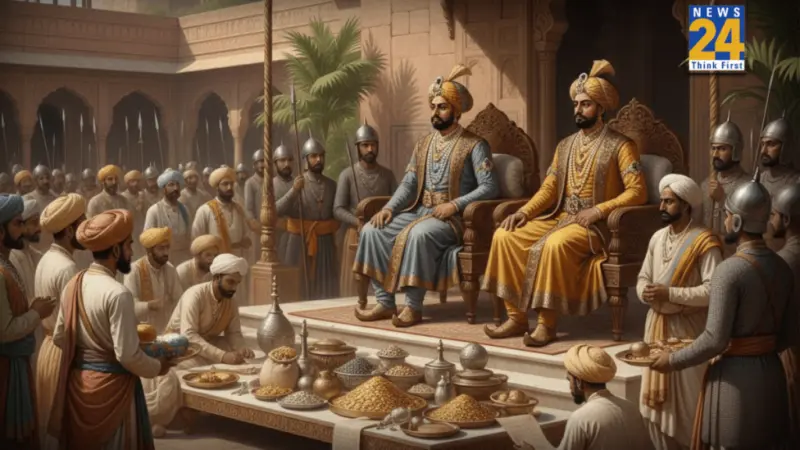
Nazrana was not an official tax but a customary practice. People often presented gifts or money to kings or officials during meetings, festivals, or special occasions. Over time, it became an expected contribution and indirectly added to state income.
Kataraparcha and Zabti Taxes
The kataraparcha tax was levied on traders and artisans, especially on luxury goods like silk. It was separate from regular market fees. Meanwhile, the zabti system was a structured land revenue method based on the valuation of land. The state assessed land value and fixed the tax accordingly, bringing more stability to revenue collection.
Together, these taxes created a strong financial base that allowed the Mughal Empire to flourish for centuries, supporting its administration, culture, and military power.