




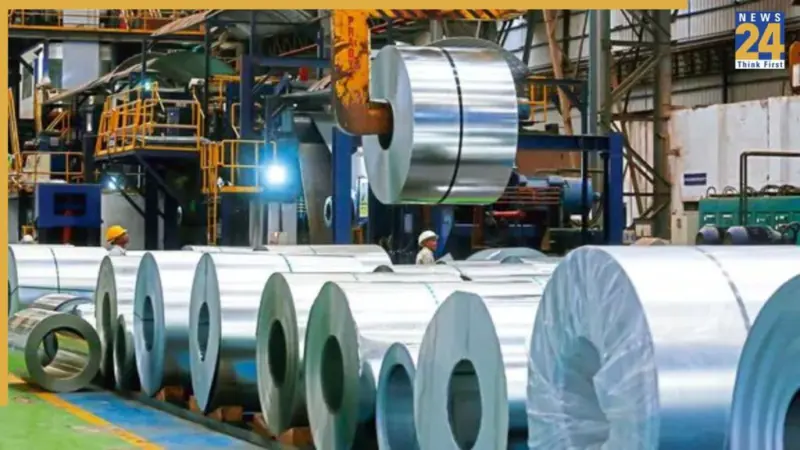

When India and Russia are discussed together, the focus usually remains on oil, gas, missiles and nuclear energy. However, the two countries are now expanding their partnership into a sector considered one of the biggest economic drivers of the coming decade - steel.
From bridges and bullet trains to defence equipment and industrial infrastructure, steel will play a central role in India's long-term economic ambitions. Recent discussions between India and Russia in Leningrad indicate that both countries are now looking to build a deeper partnership in steel production, coking coal supply, critical minerals and low-carbon technology.
Why India needs Russia in the steel sector
India is currently one of the world's fastest-growing major economies. Massive infrastructure projects, including highways, railways, metro networks, defence corridors, semiconductor plants and smart cities, are rapidly increasing the country's demand for steel.
India has set a target of expanding its steel production capacity from 220 million tonnes to 300 million tonnes by 2030. However, one of the biggest challenges remains its dependence on imports for coking coal and high-grade steel.
Coking coal is considered essential for large-scale steel production. At present, India imports a major portion of its requirement from countries such as Australia. In this situation, Russia is emerging as a strong alternative due to its vast reserves of coking coal.
For Russia, which has been searching for new markets after facing Western sanctions, India offers a stable and large consumer base. For India, Russia provides an opportunity for reliable and potentially cheaper supply.
China likely to watch closely
China has long dominated the global steel market and controls a significant share of supply chains, metal processing and rare minerals. However, India is now attempting to build its own position in this sector.
A stronger India-Russia partnership could help create alternative supply chains, reducing India's dependence on China for steel and critical minerals. Experts believe this makes the cooperation strategically important, not just economically significant.
Focus beyond traditional steel
The discussions were not limited to ordinary steel production. Special steel, critical minerals and low-carbon technologies were also major areas of focus.
Special steel is widely used in defence equipment, warships, fighter jets, high-speed railways and heavy machinery. India is still not fully self-reliant in this segment and cooperation with Russia could help bridge that gap.
At the same time, global industries are moving toward green steel and low-carbon manufacturing as Europe and the United States continue to tighten carbon emission regulations. India's push for environmentally friendly steel production is expected to become essential for remaining competitive in global markets.
Bigger strategic goals behind the partnership
The Leningrad Oblast administration also stressed cooperation in port infrastructure and logistics. This suggests that both countries may be looking beyond simple trade and toward building an integrated industrial network covering mining, shipping, processing and manufacturing.
Following the Ukraine war and Western sanctions, Russia has increasingly shifted its economic focus toward Asian markets. India has already become a major buyer of discounted Russian oil and the growing cooperation in steel and minerals reflects an effort by both countries to expand ties beyond the energy sector.
India aims to position itself not just as a consumer market but as a global manufacturing hub in the coming years. For that ambition to succeed, a stable and strong steel supply will be critical. Analysts believe the emerging India-Russia steel partnership could become an important part of that larger economic strategy.