
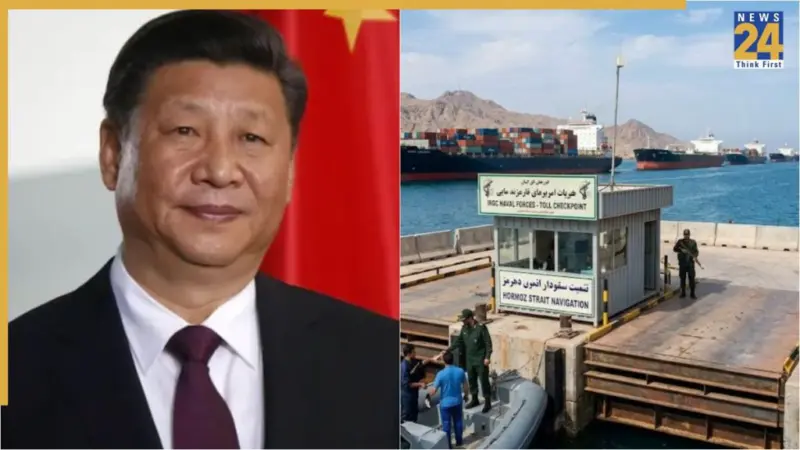

While most of the world has suffered from oil and gas shortages due to the global energy crunch triggered by Iran's blockade of the Strait of Hormuz, China is among the handful of nations who reaped significant benefits from the crisis, earning billions of dollars, even as US President Donald Trump keeps repeatedly trumpeting about having "won" the Iran war.
How China benefitted from Hormuz blockade?
The Strait of Hormuz is a critical waterway in the Persian Gulf through which about one-fifth of the world's energy supplies flow, and its closure has sparked a deepening energy crisis globally, particularly in Asian countries, forcing many to rapidly shift to alternative energy sources.
This is where China has scored big as the Asian giant is largest global player in the green energy industry, including solar panels, batteries, and electric vehicles, and as the world rushed towards renewable options to ensure energy security, the demand for Chinese manufacturers soared exponentially.
Data reveals that Chinese exports of solar panels, batteries, and electric vehicles touched record levels, generating revenues of over $22.3 billion ( about Rs 2 lakh crore), as the closure of Strait of Hormuz choked the global oil and gas supplies.
According to reports, Chinese majors like BYD and CATL emerged as the biggest beneficiaries, seeing a major surge in their shares due to the rapid pivot towards clean energy.
How Xi Jinping bet big on green energy?
As per analysts, the rapid shift towards green energy vindicates China's energy policy, and the decision of Chinese President Xi Jinping to bet big on renewable energy industry, and linking energy security with national security.
Xi's consistent push towards green energy has made China a powerhouse in the sector as the Asian superpower now controls nearly 70 percent global electric vehicle production and about 85 percent of battery manufacturing.
In contrast, the United States, China's main geopolitical rival, has continued to stick to an energy policy that revolves around fossil fuels. However, the Iran war crisis has exposed critical weaknesses in this outdated policy as disruptions in oil and gas supplies often result in US and its allies paying a hefty price.
Why more countries are shifting towards Chinese model?
According to experts, the crisis sparked by US-Israeli war on Iran and Tehran's consequent blockade of Strait of Hormuz, has essentially divided the world into two energy models; one which follows the US' fossil fuel policy, and the other which is increasingly shifting to renewable energy model championed by China.
The impact of the West Asia war can be gauged from the rapid surge in investments in renewable energy and battery storage, with energy-deficient regions like Europe rapidly adopting solar and wind energy, while the demand for electric vehicles has significantly surged in the UK.
Similarly, the demand for EVs and solar products is also growing rapidly in Southeast Asia, with Pakistan being a prime example of this shift, where solar projects have helped mitigate the impact of the energy crisis to some extent.
Pakistan is expected to save billions of dollars in energy imports if global crude oil prices continue to remain high, while countries like Indonesia, a major coal exporter, are rapidly moving towards electric vehicles and clean energy.