
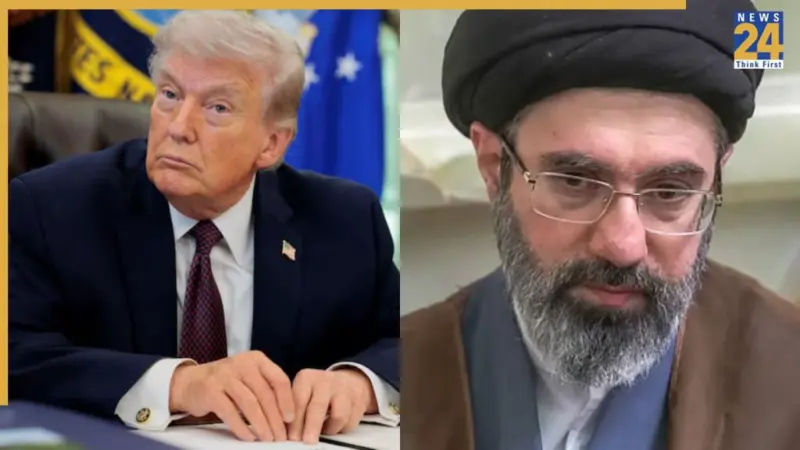

As tensions in the Middle East edge closer to a broader confrontation, urgent diplomatic efforts are underway to secure a temporary ceasefire between the United States and Iran.
Backchannel negotiations, involving multiple countries, are attempting to finalise a proposed 45-day truce, but time is quickly running out.
Narrow window for breakthrough
Sources involved in the discussions indicate that the likelihood of reaching even a limited agreement in the next 48 hours remains low. Despite this, diplomats view the current moment as a crucial last chance to prevent a significant escalation.
Failure to reach a deal could open the door to large-scale military strikes targeting Iran's civilian infrastructure. In response, there are concerns that Iran may retaliate by hitting key energy and water facilities across Gulf nations, potentially destabilising the entire region.
Trump extends deadline, issues warning
The urgency of the situation has increased following a deadline set by US President Donald Trump. Initially scheduled to end on Monday evening, the timeline was extended by 20 hours, pushing the cutoff to Tuesday, 8 pm ET.
While expressing hope that an agreement is still possible, Trump also issued a strong warning. He stated that if Iran refuses to cooperate, the US could target major infrastructure, including power plants. He also cautioned Tehran to reopen the Strait of Hormuz within 48 hours or face severe consequences.
Multiple countries involved in mediation
Diplomatic efforts are being facilitated through countries such as Pakistan, Egypt and Turkey. At the same time, direct communication channels remain active between US envoy Steve Witkoff and Iranian Foreign Minister Abbas Araghchi.
Officials familiar with the talks revealed that the United States has presented several proposals in recent days. However, none have been accepted by Iran so far.
Two-phase ceasefire plan under discussion
The proposed framework includes a two-step approach. The first phase involves implementing a 45-day ceasefire, during which both sides would attempt to negotiate a long-term resolution to the conflict. If necessary, this temporary truce could be extended.
The second phase aims to establish a comprehensive agreement to formally end hostilities across Iran and the wider Middle East.
Key issues still unresolved
Major disagreements continue to block progress. Mediators believe that reopening the Strait of Hormuz and addressing Iran's stockpile of highly enriched uranium are critical issues, but these are unlikely to be resolved during the initial ceasefire phase.
Instead, these matters are expected to be part of any final, long-term agreement.
Iran remains cautious
Iranian officials have expressed serious reservations about the proposed deal. They fear that a temporary ceasefire could mirror past situations in regions like Gaza and Lebanon, where truces failed to prevent further attacks.
Tehran is particularly reluctant to give up what it considers its main leverage, control over access to the Strait of Hormuz and its uranium reserves, in exchange for a short-term arrangement.
Risk of regional fallout
Officials involved in mediation efforts warn that the consequences of failed talks could be severe. Any military strike by the US or Israel on Iran's energy infrastructure could trigger strong retaliation.
Potential targets could include oil installations and desalination plants in Gulf countries, raising the risk of widespread disruption across the region.
Tough public stand from Tehran
Even as negotiations continue behind closed doors, Iran's public stance remains firm. The naval wing of the Revolutionary Guards has stated that conditions in the Strait of Hormuz will not return to what they were before the conflict, particularly for the US and Israel.
Adding to the tensions, Iran has reportedly refused to engage in direct talks with US officials in Islamabad, calling the proposal unacceptable.