
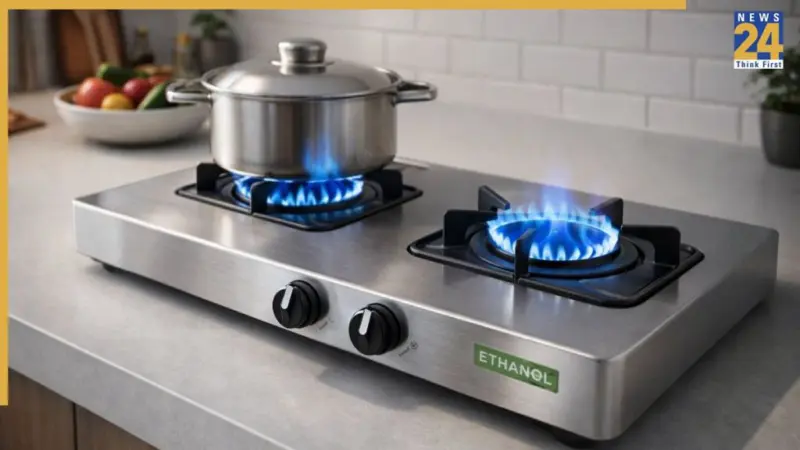

Amid rising concerns over global energy supplies due to the ongoing West Asian crisis, the Indian government is actively exploring alternatives to reduce dependence on imported fuels.
One of the key ideas under consideration is the use of ethanol as a cooking fuel for commercial establishments such as street food vendors, small eateries and restaurants.
Sources on Friday indicated that a high-level ministerial group is examining the feasibility of rolling out ethanol-based cooking solutions on a large scale, aiming to boost energy security while cutting costs for small businesses.
What is ethanol?
Ethanol is a type of alcohol produced mainly from crops like sugarcane and maize. In India, it is already widely used as a blending component in petrol under the government's ethanol blending programme. Because it is domestically produced, ethanol is considered a renewable and relatively cleaner fuel compared to fossil fuels.
Its potential use as a cooking fuel comes from its ability to burn cleanly while generating sufficient heat for commercial cooking needs.
Why is the government pushing this shift?
The move comes at a time when global LPG supplies have been impacted by geopolitical tensions, leading to price volatility. For India, which imports a large portion of its LPG, this creates uncertainty for both households and businesses.
By promoting ethanol, produced within the country, the government aims to reduce reliance on imports and ensure more stable fuel pricing. India's ethanol production capacity has already crossed 2000 crore litres, providing a strong base for such a transition.
How efficient is ethanol compared to LPG?
Recent technical assessments of ethanol-based burners, often referred to as 'Superblu' systems, suggest that they are highly efficient. Around one litre of ethanol can generate consistent, high heat for several hours, allowing small vendors to operate for extended periods without frequent refuelling.
Unlike LPG cylinders, which require pressurised storage and complex transportation, ethanol can be stored in simpler containers. This makes it easier to handle, transport and store, especially for small-scale businesses.
In terms of performance, ethanol produces a steady blue flame similar to LPG, but with less smoke and soot. This cleaner burn can improve working conditions, particularly in compact cooking spaces where ventilation is limited.
Can ethanol reduce costs for small businesses?
Fuel is one of the biggest expenses for small food businesses across India. With commercial LPG prices remaining high due to global factors, switching to ethanol could offer significant savings.
Estimates suggest ethanol could be priced notably lower than LPG, potentially reducing fuel expenses by around 25-30%. For small vendors, dhabas and food carts, this could mean better profit margins and more stable monthly earnings.
Additionally, since ethanol is produced domestically, its pricing is less likely to fluctuate due to international oil markets or disruptions in key shipping routes.
What are the safety and logistical challenges?
Despite its advantages, shifting to ethanol cooking is not without challenges. Authorities are currently working on setting clear safety standards for ethanol-based stoves and storage systems.
Unlike LPG, which is stored under pressure, ethanol is a liquid fuel and must be handled carefully to avoid spills and fire hazards. Proper training, certified equipment and strict guidelines will be essential for safe adoption.
On the distribution side, the government is considering using the existing ethanol supply network, developed for fuel blending, to support cooking-grade ethanol. This could help in setting up a parallel, accessible supply chain across the country.
What lies ahead?
A ministerial panel involving key departments such as petroleum, agriculture and transport is expected to finalise its recommendations soon. If approved, the initiative could evolve into a nationwide programme aimed at promoting clean and affordable cooking fuel for commercial users.