
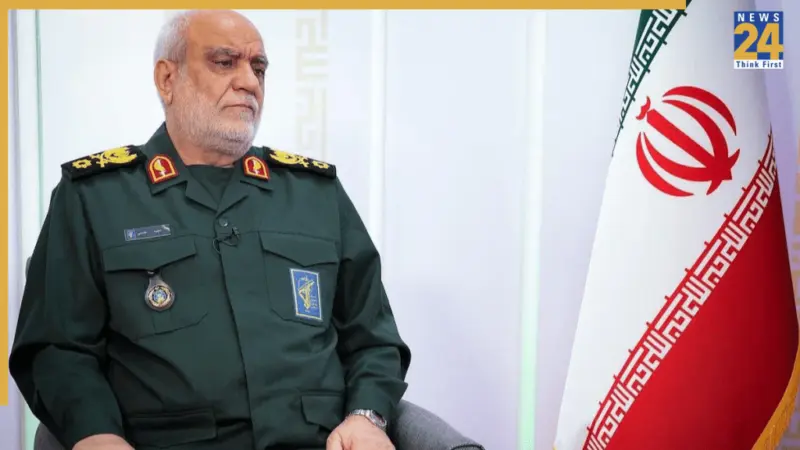

The conflict involving Israel, the United States, and Iran has taken a serious turn after an overnight airstrike in Tehran killed Maj Gen Majid Khademi, a top intelligence official of the Islamic Revolutionary Guard Corps (IRGC).
The Israel Defense Forces (IDF) said the strike was based on precise intelligence and targeted Khademi while he was actively managing intelligence operations related to the ongoing conflict. Iranian state-linked media, including Fars News Agency, also confirmed his death, showing how important his role was within Iran's military system.
Who Was Maj Gen Majid Khademi
Majid Khademi was one of the most important intelligence figures in the IRGC. Over the years, he rose to lead both the Intelligence Protection Organisation and later the main Intelligence Organisation. These roles gave him control over both internal security and external intelligence operations. He became head of the intelligence unit in 2025 after his predecessor, Mohammad Kazemi, was killed in an earlier Israeli strike. Khademi was responsible for collecting and analysing intelligence for Iran's top leadership and was involved in planning operations against Israel and other targets.
Role in Internal Surveillance and Security
Apart from external operations, Khademi also played a key role in monitoring activities داخل Iran. The IRGC's intelligence wing is known for tracking dissent, running informant networks, and controlling protests. His position made him central to maintaining internal security and stability for the Iranian leadership.
The Power of the IRGC Intelligence Network
The organisation Khademi led is one of Iran's most powerful intelligence bodies. Created in 2009, it works alongside the country's official intelligence ministry but is often seen as more aggressive and ideologically driven. It has a wide network of informants, including links with the Basij militia. It plays a major role in both domestic control and overseas intelligence operations, often working with the IRGC's Quds Force.
Strategic Impact of the Strike
Khademi's death is being seen as both a tactical and symbolic loss for Iran. The IDF believes this will weaken the IRGC's ability to manage and coordinate intelligence-based operations. However, Iran has a history of quickly replacing top officials, so the long-term impact is still uncertain. Even so, repeated strikes on senior leaders can create temporary gaps in planning and coordination.
A Shift Towards Targeting Leadership
This strike shows a larger shift in the conflict, where attacks are now focusing not just on military targets but also on top leaders responsible for strategy and intelligence. For Iran, losing such key figures affects both operations and morale. For Israel and the United States, it is part of a broader effort to weaken decision-making at the highest levels.