
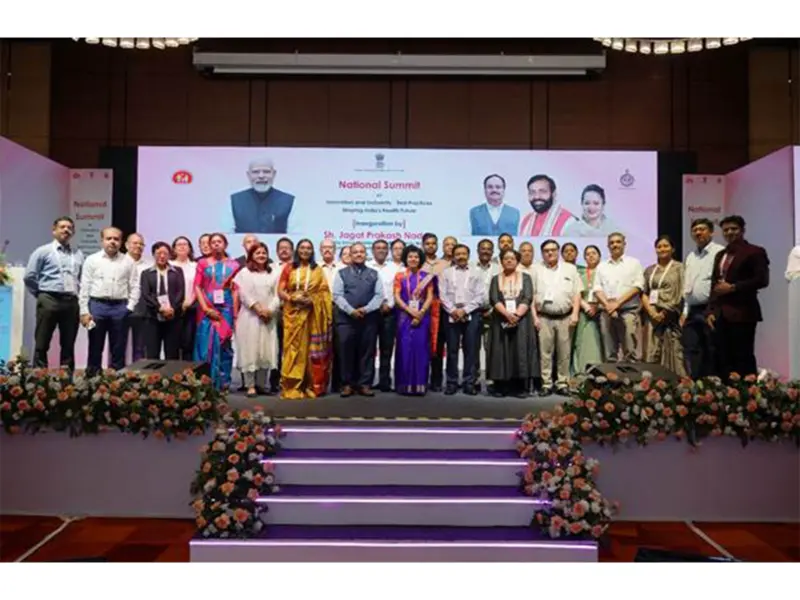

The National Health Mission (NHM) Summit concluded with detailed technical discussions on the findings of the 17th Common Review Mission (CRM), an independent assessment mechanism under the NHM, highlighting progress in primary healthcare and digital innovations across India.
The two-day Summit, entitled “Innovation and Inclusivity: Best Practices Shaping India’s Health Future,” began with presentations on successful practices and innovative interventions carried out by various States and Union Territories. These sessions showcased scalable models in areas such as strengthening primary healthcare, digital health, maternal and child health, and non-communicable disease management. They also facilitated peer learning and enabled the alignment of State and UT strategies with national priorities, according to a release from the Ministry of Health and Family Welfare.
The Ministry also presented new and ongoing initiatives to enhance awareness and support implementation at the local level. On the Summit’s second day, structured presentations coordinated by the Ministry examined CRM findings from visits to 17 States and Union Territories, providing insights into health system performance, service delivery, and governance practices.
The CRM reports noted significant advances in key areas, including operationalising Ayushman Arogya Mandirs, expanding primary healthcare services, and increasing the use of digital health solutions. Improvements were observed in maternal and child health service delivery, screening and management of non-communicable diseases, and teleconsultation platforms aimed at improving access to care. Discussions also identified areas needing further enhancement, such as optimising human resource deployment, ensuring the availability of essential drugs and diagnostics, and expanding healthcare reach in remote locations.
Additional emphasis was placed on improving data quality and leveraging digital platforms for real-time monitoring and evidence-based decision-making. Strengthening referral systems, supportive supervision, and community participation emerged as essential factors for sustaining progress and improving health outcomes.
The Ministry stressed the importance of documenting and scaling best practices identified during CRM visits, encouraging States and Union Territories to adopt innovative, data-driven approaches while promoting knowledge exchange.
In her closing remarks, Additional Secretary and Mission Director of NHM, Aradhna Patnaik, praised the progress made by States and Union Territories in achieving short-term NHM priorities. She emphasised the need to now focus on medium- and long-term health system goals aligned with the Sustainable Development Goals (SDGs) targets for 2030, advocating for sustained, outcome-oriented planning.
Ms Patnaik highlighted that while digital health initiatives are transforming service delivery, measures must ensure that vulnerable beneficiaries are not disadvantaged by digitalisation. She called for continuous sensitisation and capacity building among frontline health workers to maintain inclusive, user-friendly services. She also drew attention to operational challenges such as the need to strengthen biomedical waste management to ensure safe and compliant healthcare practices.
Further, she noted the importance of key initiatives launched during the Summit and urged States and Union Territories to implement them effectively to maximise ground-level impact. Looking ahead, she advocated sustaining momentum through continuous learning, enhanced cross-state collaboration, and context-specific scaling of best practices.
The Summit ended reaffirming the Government’s commitment to cooperative federalism and ongoing system strengthening, with the CRM playing a vital role in fostering learning, accountability, and informed policy making. The deliberations reinforced a shared commitment to strengthening a resilient, inclusive, and future-ready public health system that meets the evolving healthcare needs of the population.