
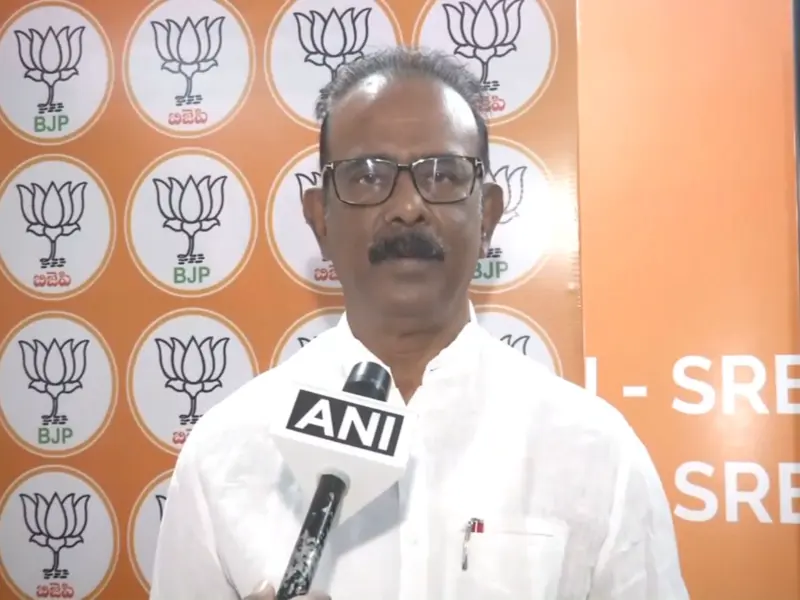

BJP leader Boora Narsaiah Goud highlighted the allocation of seats in Pakistan-Occupied Kashmir (PoK) as a key feature of the Delimitation Bill.
He stated that the bill would allow PoK residents to exercise their right to vote and enable their representatives to participate in both the Lok Sabha and Rajya Sabha.
“The most important part we are missing is the provision in the Delimitation Bill, which is the allocation of the seats in the PoK. It is the dream of every Indian irrespective of caste, creed or religion, to take back the PoK, which legally, constitutionally, and morally belongs to India. And someday, we will get back PoK, and people will have the right to access votes in the last 77 years, and their representatives will be able to attend the Rajya Sabha and Lok Sabha. That is the beauty of this bill,” Narsaiah said.
Earlier, the Lok Sabha concluded a 12-hour session discussing amendments to the women’s reservation bill. The amendments remove the necessity of a census before the bill’s implementation. The session resulted in 251 AYES and 185 NOES out of 333 votes. Following the majority, the Constitution (One Hundred and Thirty-First Amendment) Bill, 2026, the Delimitation Bill, 2026, and other related bills were introduced in the Lok Sabha.
Discussions and voting on the Constitution (One Hundred and Thirty-First Amendment) Bill, 2026-which provides for 33 per cent reservation for women in Parliament and State Assemblies-along with the Union Territories Laws (Amendment) Bill, 2026, extending the reservation to Delhi and Jammu and Kashmir, and the Delimitation Bill, aiming to increase Lok Sabha constituencies to 850, are set to continue.
The government plans to implement women’s reservation before the 2029 General Elections by amending the 2023 Act and making a constitutional amendment to separate the delimitation process from the 2027 census.
Opposition members have expressed concerns about the constitutional amendment for delimitation based on the 2011 census, which would increase Lok Sabha seats to 850. They argue the bill could reduce representation for southern states. While supporting early enactment of the Women’s Reservation Act, the opposition strongly opposes the Delimitation Bill.