
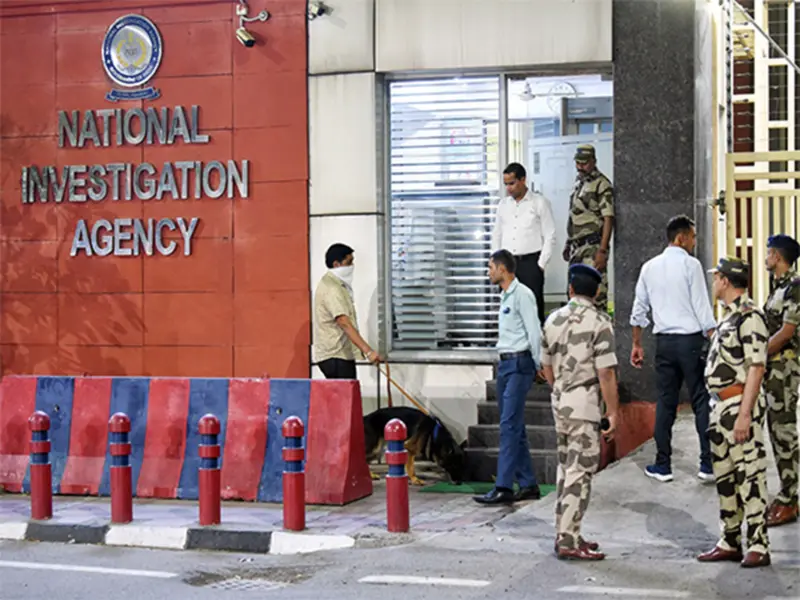

The Central government has designated a special court in Ahmedabad, Gujarat, to handle trials of cases investigated by the National Investigation Agency (NIA), marking a step to strengthen the judicial process for sensitive offences.
On March 17, the Ministry of Home Affairs (MHA), exercising its authority under Section 11 of the National Investigation Agency Act, 2008, and in consultation with the Gujarat High Court and the state government, notified the Additional Principal Judge, City Civil Court, Ahmedabad, as the special court.
This court will conduct exclusive trials related to scheduled offences investigated by the NIA, with officials stating the intent is to ensure expedited and focused adjudication of cases concerning national security and terrorism.
The notification states the special court's jurisdiction covers the entire state of Gujarat, allowing it to hear all NIA cases arising within the state. The notification reads: “In exercise of the powers conferred by section 11 of the National Investigation Agency, Act 2008 (34 of 2008), the Central Government, in consultation with the Hon’ble Chief Justice of Gujarat High Court and the Government of Gujarat, hereby designates the Court of Additional Principal Judge, City Civil Court, Ahmedabad as the Special Court for the purpose of sub-section (1) of section 11 of the said Act, exclusively for the trial of the Scheduled Offences investigated by the National Investigation Agency. The jurisdiction of the Special Court for the National Investigation Agency mentioned above shall extend throughout the State of Gujarat.”
The notification aims to create a dedicated judicial mechanism for the speedy and effective trial of NIA cases in Gujarat. The special court will focus exclusively on cases investigated by the NIA, ensuring concentrated attention on serious offences and faster trials of scheduled offences, which generally involve terrorism, national security, and other significant crimes under the National Investigation Agency Act, 2008.
This measure is intended to enhance the legal framework for the efficient and effective prosecution of national security-related offences.