




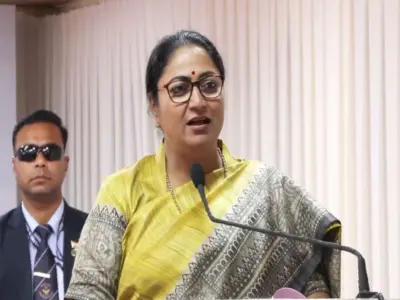

Delhi Chief Minister Rekha Gupta stated that the government is operating on a war footing to provide sufficient drinking water to every resident of the capital.
The administration is focusing equally on immediate relief measures and long-term solutions to manage the water crisis sustainably.
According to the Chief Minister’s office, Haryana has pledged to maintain a minimum water supply of 1,000 cusecs through the Munak Canal to address water challenges caused by the severe heat. Efforts include deploying over 980 water tankers conducting more than 6,000 daily trips to offer relief to citizens.
On Saturday, Ms Gupta held a comprehensive review meeting on the drinking water challenges and supply situation in Delhi via video conference from the Chief Minister Seva Sadan. She reported that water availability near Wazirabad in the Yamuna River had decreased, causing pressure on the supply system. Following a conversation with Haryana Chief Minister Nayab Singh Saini, Haryana assured the minimum supply levels through the Munak Canal.
The Chief Minister emphasised that safeguarding Delhi’s interests and ensuring drinking water availability rank among the government’s highest priorities.
Officials informed Ms Gupta that over 980 Southern Delhi Jal Board (DJB) tankers are operational, running more than 6,000 trips daily. Smaller tankers are also deployed to serve densely populated areas with narrow access roads. The installation of additional borewells in the Yamuna Khadar area has increased water production capacity by 10.5 million gallons per day (MGD).
Ms Gupta instructed officials to treat every water leakage seriously, stating, “every single drop of water is precious and any kind of wastage will not be acceptable.” She directed DJB personnel to personally monitor and verify daily complaints, visiting sites when necessary.
“11,055 complaints were received on the Delhi Jal Board helpline in the last week, out of which more than 8,500 complaints have been resolved,” the Chief Minister said. She ordered the swift resolution of the remaining complaints.
The Chief Minister further directed that sufficient water tankers be regularly allocated to all affected areas, with trip numbers increased as required. She also emphasised that alongside short-term responses, long-term water management planning should proceed at an equal pace to meet future needs effectively.
A feasibility study to bring water from Haryana via pipeline, aiming to reduce water loss and leakage, is being conducted by IIT Roorkee. Other long-term initiatives include dredging and de-silting the Yamuna near Wazirabad, establishing new water treatment plants, and developing additional borewells in the Yamuna Khadar region.
Ms Gupta affirmed the Delhi government’s full commitment to providing safe and adequate drinking water. Future-oriented plans being developed will strengthen the capital’s water security.
She directed that a dual water supply system be introduced in phases to encourage the use of treated water from sewage treatment plants for non-potable purposes such as horticulture and vehicle washing.
Highlighting the importance of water conservation, the Chief Minister instructed the Delhi Jal Board to launch a major public awareness campaign promoting the judicious use of water. She stated, “A permanent solution to the water crisis is possible not only by increasing the supply but also through the judicious use and conservation of water.”
She also noted ongoing development of rainwater harvesting systems in 75 CM Shri schools. Plans to construct 500 new water harvesting structures and revive 1,000 existing ones have been initiated, with the tender process underway.