




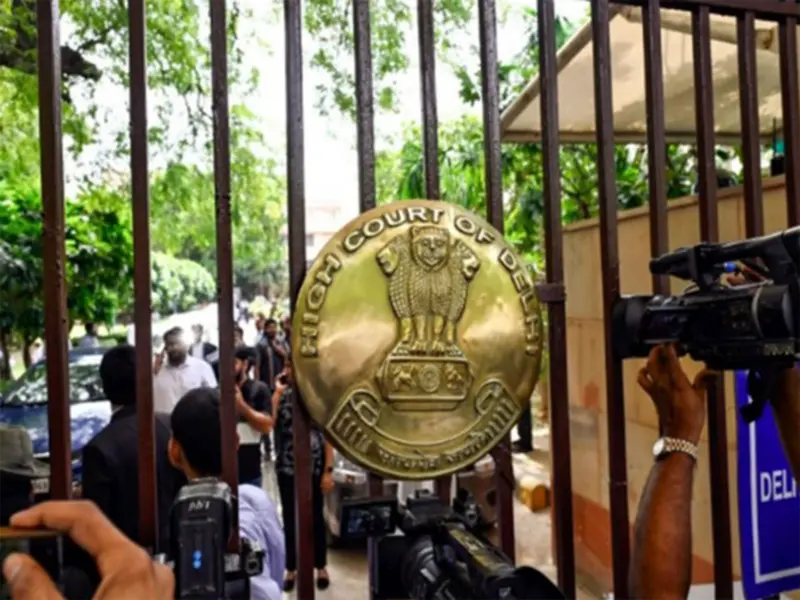

The Delhi High Court has ruled that impounding a passport before the expiry of the reply period and without considering the affected person's response constitutes a clear violation of natural justice.
The court set aside the order of a Single Judge and reinstated the writ petition, stating that the case warranted the exercise of writ jurisdiction despite the availability of alternative statutory remedies.
A Division Bench comprising Chief Justice Devendra Kumar Upadhyaya and Justice Tejas Karia noted that the final order impounding the appellant Shravan Gupta’s passport was issued on August 3, 2021, although the deadline to respond to the show cause notice was August 4, 2021. The court stated that denying the appellant the full time to respond amounted to a denial of a fair opportunity.
The bench further observed that the impugned order did not address the reply submitted earlier by Gupta. In these circumstances, the court found a prima facie case of violation of principles of natural justice.
Senior Advocates Vikas Pahwa and Tanveer Ahmed Mir, representing Gupta, argued that the authorities’ actions were arbitrary and contrary to due process. They contended that relegating the appellant to a statutory appeal after several years was unjustified, especially given the procedural illegality in the order itself.
Conversely, Anubha Bhardwaj, CGSC, along with Ananaya Shamshery and Anchal Kashyap for the Union of India, and Additional Solicitor General DP Singh, aided by Manu Mishra and Garima Saxena for the Enforcement Directorate, submitted that an effective alternative remedy was available under the Passports Act and that the writ petition was rightly declined.
The court rejected this contention, reiterating that although High Courts ordinarily do not entertain writ petitions where statutory remedies exist, this rule is not absolute. Citing the Supreme Court’s judgment in Whirlpool Corporation v. Registrar of Trade Marks, the bench emphasised that writ jurisdiction can be exercised in cases involving violations of natural justice, lack of jurisdiction, or infringement of fundamental rights.
The court highlighted that proceedings relating to passport impounding have serious consequences and require strict adherence to procedural fairness. It observed that natural justice principles hold special significance in such matters, particularly following the law established in Maneka Gandhi v. Union of India.
The case arose from the impounding of Gupta’s passport in August 2021, following show cause notices issued based on inputs from the Enforcement Directorate alleging non-cooperation in the AgustaWestland helicopter scam investigation. Gupta had challenged both the notices and the final order as procedurally defective.
Allowing the appeal, the Division Bench set aside the Single Judge’s order dated February 13, 2026, and restored the writ petition to its original number for fresh consideration. The court directed that the matter be decided expeditiously, granted time to the Enforcement Directorate to file its counter affidavit, and allowed the appellant the liberty to seek interim relief.