




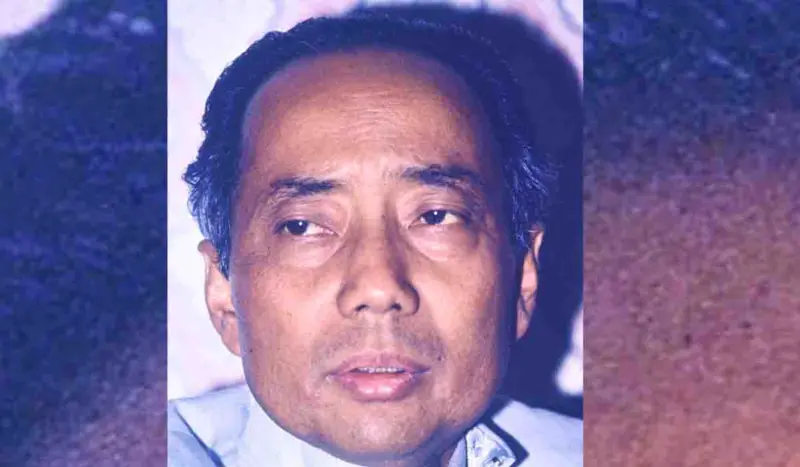

Hiteswar Saikia died on this day (April 22) in 1996, slumped in his chair inside the office in New Delhi. He had been governing Assam right up to his last breath, quite literally.
His kidneys were failing, he had been running a recurring fever, and still he turned up for work.
He was 61.
If you are in your twenties and grew up in Assam, there is a reasonable chance you have never been taught who he was. The history chapters in school moved swiftly from the Ahom kingdom to independence to a few paragraphs about the Assam Agitation, and somewhere in that rush, the man who arguably held this state together during its most dangerous decades got left out.
So here is a quick catch-up.
The world he inherited
When Hiteswar Saikia became chief minister for the first time in 1983, Assam was not a place you would want to govern. The six-year Assam Agitation was at its peak. The state had been convulsed by the question of illegal immigration, and the decision to hold elections that year, despite a widespread boycott, produced some of the worst communal violence in the state’s post-independence history. The Nellie massacre happened that February. Over 2,000 people were killed in a single day, in a single district.
Hiteswar Saikia did not choose to inherit this. He inherited it anyway.
By 1991, when he returned for a second term, the problem had a new shape. ULFA had turned into a full-blown insurgency. Businessmen were being kidnapped. Government officials were taken hostage. Bomb blasts were routine enough that people planned their days around avoiding certain areas. This was the Assam that GenZ Assamese people’s parents and grandparents grew up in, even if they rarely talk about it at the dinner table.
What he actually did
Saikia’s response to the militancy was blunt and controversial. He backed Operation Rhino, a major military crackdown on ULFA. Critics accused him of excess. Supporters said he had no choice. The honest answer is probably both, and the debate has not been fully settled even now.
But strip out the politics and look at what he built. He pushed through the establishment of Tezpur University and Assam University in Silchar simultaneously, lobbying Delhi hard for both when there was no obvious reason for the central government to say yes to either. He laid the groundwork for the Numaligarh Refinery, inviting the then Prime Minister to lay the foundation stone in July 1992. He provincialised roughly 2,500 private schools, bringing them under state funding and expanding educational access in rural areas at a time when basic governance had nearly broken down.
These were not glamorous decisions. They did not trend. There was no Instagram reel to show for any of it. But the universities exist. The refinery exists. Those schools exist.
Why he matters now
Assam in 2026 is a very different state. The insurgency is over. The economy has grown. There are highways where there used to be mud tracks and anxiety. A lot of what makes ordinary life here functional today was built in conditions that most people now alive in this state have never experienced.
Saikia did not fix everything. He governed during a period of serious human rights concerns, and no honest reckoning of his legacy ignores that. But he was someone who showed up for a job that could have killed him, and in a sense it did, and he kept showing up anyway.
Thirty years on, that is at least worth knowing about.