
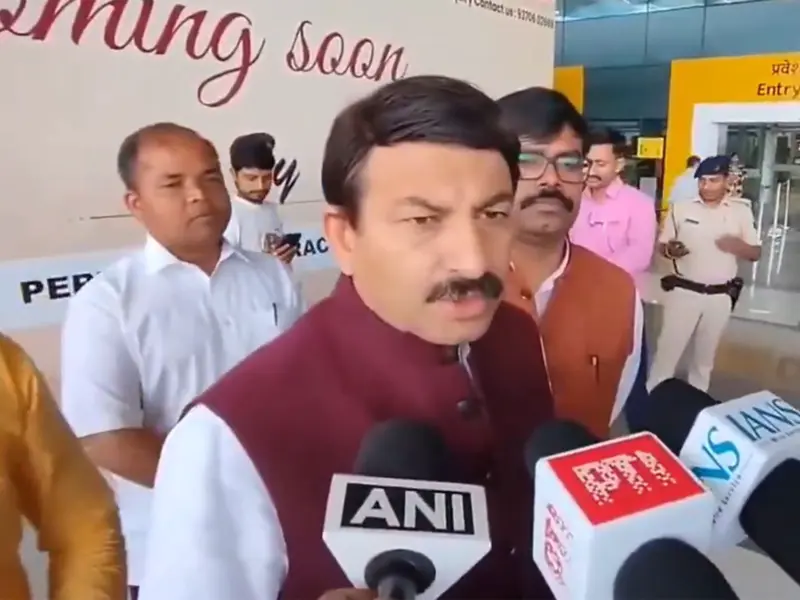

Bharatiya Janata Party MP Manoj Tiwari described India's access to the Strait of Hormuz as a diplomatic victory on March 28. He noted that India is among only five countries permitted movement through the strategic waterway.
"All the routes through the Strait of Hormuz are open for India. This is a major victory for us. Currently, movement is allowed for only five countries, and India is one of them. This is a diplomatic victory for India; it is the result of the relations we maintain as promoters of peace. Apart from this, arrangements are being made to ensure that the prices of diesel and petrol do not increase," Tiwari told reporters in Patna, Bihar.
Responding to West Bengal Chief Minister Mamata Banerjee's remarks on diesel and petrol prices, he said, "She will not understand. Whoever is a well-wisher of the public will take such actions."
On March 27, India reiterated its urgent call for the preservation of safe and uninterrupted maritime transit through the Strait of Hormuz, emphasising that international law must be upheld amid the deteriorating security situation in West Asia. The government confirmed it is maintaining vigilant oversight of regional volatilities to protect national energy interests.
Ministry of External Affairs spokesperson Randhir Jaiswal, during a weekly media briefing, stated that New Delhi is actively coordinating with global partners to ensure stability. "We are closely following all developments in West Asia. We continue to call for ensuring safe and free navigation through the Strait of Hormuz as a matter of priority," he said.
He provided an update on maritime safety, disclosing that four Indian-bound vessels carrying liquefied petroleum gas (LPG) successfully passed through the chokepoint. "We have kept you informed about the Indian ships that have so far crossed the Strait of Hormuz. Four ships, loaded with LPG, have arrived in India after safely crossing the Strait of Hormuz a few days ago. We continue to remain in touch with all concerned countries to ensure safe passage and meet our energy requirements," Jaiswal added.
Regarding India's broader strategy for securing fuel supplies, he said procurement decisions are guided by domestic demand from its 1.4 billion citizens alongside prevailing international conditions. "Our approach is based on the imperative to meet the needs of our people, market conditions, and the global context. These remain the guiding principles," he explained, referring specific technical questions to the Petroleum Ministry.
The government's emphasis on regional stability coincides with ongoing high-level diplomatic efforts in Europe.