
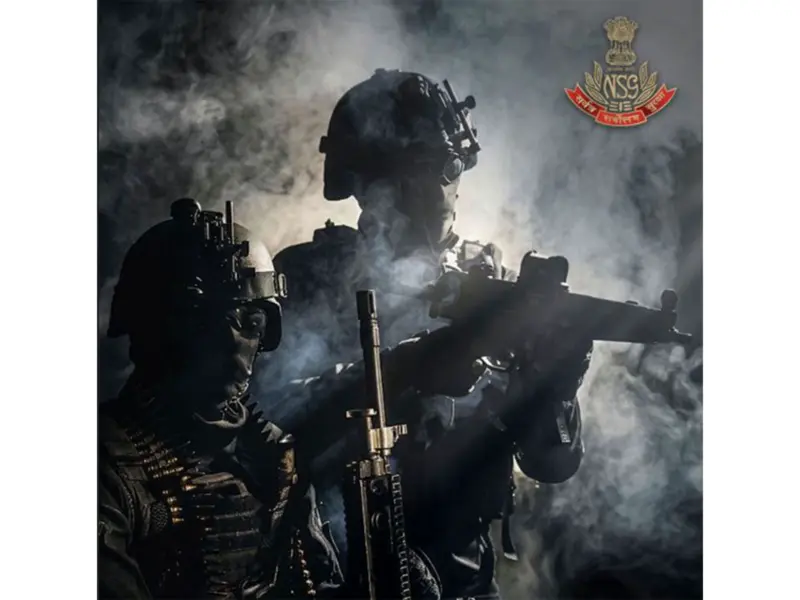

India's new counter-terrorism policy, PRAHAAR, introduced in February 2026, is being recognised as more than a domestic security framework.
Experts indicate that the doctrine could redefine counter-terror cooperation across the Indo-Pacific and Southeast Asia in response to evolving threats from jihadist groups, digital radicalisation, and organised crime networks.
Associate Research Fellow Jasminder Singh of the S Rajaratnam School of International Studies at Nanyang Technological University described PRAHAAR as India's “first comprehensive counterterrorism framework” that shifts the country's approach from reactive to a coordinated, intelligence-led strategy.
The Ministry of Home Affairs (MHA) document outlines PRAHAAR as a structured national policy to prevent and combat terrorism through intelligence coordination, legal mechanisms, technological monitoring, and international cooperation.
"India's PRAHAAR doctrine, introduced in February 2026, is the country's first comprehensive counterterrorism framework, transforming India's reactive security posture into a coordinated, intelligence-led strategy," Singh stated.
The RSIS commentary highlights how terrorism in Asia has become increasingly transnational, with extremist networks utilising maritime routes, encrypted platforms, illicit financing, and digital propaganda to operate across South and Southeast Asia.
"Terrorism in Asia has long transcended national borders. Militant networks, digital propaganda ecosystems, and illicit financing channels now operate fluidly across South and Southeast Asia," Singh wrote.
He noted that the mismatch between transnational threats and fragmented national responses has created structural vulnerabilities in the Indo-Pacific, which PRAHAAR aims to address.
The PRAHAAR doctrine is founded on seven pillars: prevention, response, aggregation of internal capacities, human rights and rule of law, attenuation of conditions enabling terrorism and radicalisation, aligning international efforts, and recovery and resilience.
According to the MHA policy, the doctrine is based on:
- Prevention of terror attacks to protect Indian citizens and interests;
- Swift and proportionate responses to threats;
- Aggregation of internal capacities for a whole-of-government approach;
- Human rights and rule of law-based threat mitigation;
- Attenuation of conditions enabling terrorism including radicalisation;
- Alignment and shaping of international counter-terrorism efforts;
- Recovery and resilience through a whole-of-society approach.
The policy states that India follows a proactive, intelligence-guided counter-terrorism strategy, with the Multi Agency Centre (MAC) and Joint Task Force on Intelligence (JTFI) under the Intelligence Bureau serving as the central platforms for real-time intelligence sharing.
"This approach is primarily 'Intelligence-Guided', in which primacy is accorded to intelligence gathering and its dissemination to executive agencies for neutralisation of threat," the policy noted. It added, "Operationalisation of the Multi-Agency Centre (MAC) along with the Joint Task Force on Intelligence (JTFI) in the Intelligence Bureau (IB) remains the nodal platform for efficient and real-time sharing of Counter Terrorism (CT)-related inputs across the country and subsequent prevention against disruptions."
The doctrine emerges against a backdrop of sustained terror threats from Pakistan-based groups such as Lashkar-e-Taiba, Jaish-e-Mohammed, and their proxy, The Resistance Front.
The RSIS commentary referenced the 2025 Pahalgam attack, along with the 2001 Parliament attack and the 2008 Mumbai attacks, as events that revealed weaknesses in intelligence sharing, crisis coordination, and investigative capacity.
PRAHAAR seeks to transition India's terror response from crisis-based reactions to a doctrine-driven system focused on intelligence fusion and coordinated action.
"At its core is a shift towards intelligence-led counterterrorism, anchored by institutions such as the Multi-Agency Centre and the Joint Task Force on Intelligence," Singh wrote.
The think tank’s review also noted technological and organisational evolution within terror networks, identifying increased use of encrypted transactions, cryptocurrency, and digital wallets for terror financing.
"The policy flags technological advancements like encryption, the dark web, and crypto wallets, which have allowed the terror groups to operate anonymously. Disrupting and intercepting terrorist efforts to access and use CBRNED (Chemical, Biological, Radiological, Nuclear, Explosive, Digital) material remains a challenge for Counter Terrorism (CT) agencies," the MHA document stated.
It also noted concern over hostile actors exploiting drones, robotics, the dark web, and encrypted messaging applications. "The threat of state and non-state actors misusing drones and robotics for lethal purposes remains another area of concern, even as criminal hackers and nation-states continue to target India through cyber-attack," the policy document said.
According to the RSIS review, Jaish-e-Mohammed has expanded recruitment through a women's wing called "Jamaat-ul-Mominat", while Lashkar-e-Taiba has increased maritime-focused training via a specialised "Water Force."
Singh referenced the 2026 Global Terrorism Index, which ranked Pakistan as the country most affected by terrorism, and a US Congressional Research Service report describing Pakistan as both a base of operations and a target for many militant groups.
PRAHAAR emphasises law, governance, and deradicalisation, integrating "human rights and 'Rule of Law' based processes for mitigation of threats" and promoting a "whole-of-government" and "whole-of-society" approach.
"It emphasises due process, the proportional use of force, and institutional oversight, reflecting an effort to balance security imperatives with democratic accountability," Singh stated.
The policy reiterates India's commitment to a "zero tolerance" stance against terrorism.
"India has always denounced terrorism and its use by any actor for achieving any stated or unstated ends, unambiguously and unequivocally," the document stated. "India has always stood by the victims of terrorism and has been steadfast in its belief that there can be no justification whatsoever for violence in the world. It is this principled approach which informs the Indian policy of ‘zero tolerance’ against terrorism," it added.
The RSIS review highlighted the increasing strategic importance of cooperation between India and Southeast Asian nations in maritime security, cyber monitoring, and intelligence sharing.
"South Asia has long served as an ideological and operational hub for militant networks in Southeast Asia. For its part, Southeast Asia provides recruitment pools, logistical pathways, and maritime routes that sustain extremist ecosystems across the region," Singh stated.
The review also highlighted that encrypted messaging services, decentralised digital networks, and cryptocurrency financing have enabled militant groups to coordinate operations across borders "with unprecedented speed and anonymity."
The paper suggested that India's growing cyber capabilities and expanding Indo-Pacific outreach under the Act East Policy could strengthen New Delhi's position as a regional security player.
"Counterterrorism is now emerging as a central pillar of this engagement," the RSIS commentary noted.
Singh cautioned that PRAHAAR's success will depend on reducing inter-agency rivalry and ensuring effective coordination between the central government and states.
"If implemented effectively, PRAHAAR could serve as the foundation for a more integrated India-Southeast Asia counterterrorism partnership," the commentary concluded.
The review added that such a framework would strengthen regional resilience to extremist threats and contribute to a broader security architecture capable of addressing the increasingly interconnected and technologically driven nature of terrorism in the Indo-Pacific.