
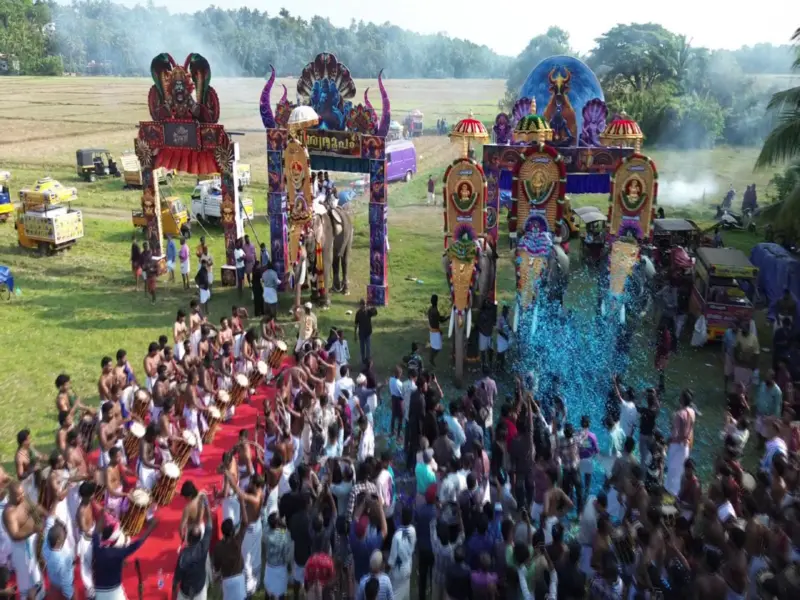

In Keralam's misty hills and temple towns, the connection between humans and elephants transcends coexistence, embodying faith, tradition, and emotion that has lasted for centuries and continues to evolve.
Elephants feature prominently in cultural identity and grandeur, especially at events like the Thrissur Pooram festival, which is over two centuries old. These animals, standing more than ten feet tall and adorned with golden ornaments, are central to Keralam’s most iconic celebrations.
Thousands gather at Thrissur Pooram to experience a blend of tradition, music, and devotion, with traditional ensembles such as chenda melam and panchavadyam creating an evocative atmosphere. Girish K.G., the temple committee president, said: “Thrissur Pooram is a celebration where people from all castes and religions participate equally. The youth play a big role – they come, engage, and truly enjoy the experience.”
Beyond cultural significance, elephants have gained importance in tourism. Visitors from around the globe seek close encounters such as feeding elephants, observing them bathing in rivers, or seeing them in their natural environments. For many local families, elephant tourism provides essential livelihoods, supporting traditions and the mahouts who care for the animals.
A tourist described their visit: “Seeing elephants up close was unforgettable. Feeding them and watching them bathe felt very special; it’s something you don’t experience every day.”
However, the evolving relationship also prompts considerations regarding the balance between tradition, the economy, and animal welfare.
Central to this relationship is the bond between each elephant and its mahout, who serves not only as a trainer but also as a lifelong companion. This relationship is built over years of shared routines including morning walks, river baths, and forest journeys, founded on understanding rather than control.
A mahout explained: “We go into the forest and train elephants. The work is very hard, but it gives us happiness. Over time, they become like family.” Given that elephants can live up to 70 years, these connections often last for decades, based on patience, respect, and mutual trust.
From temple courtyards to quiet forest trails, the story of elephants in Keralam and throughout South India illustrates a profound connection that balances tradition and change, devotion and responsibility.
In every festival procession and silent forest walk, this bond between humans and nature reveals itself as deeply emotional rather than merely practical. As Keralam advances, maintaining this legacy while ensuring the well-being of elephants remains essential to sustaining this enduring coexistence.