
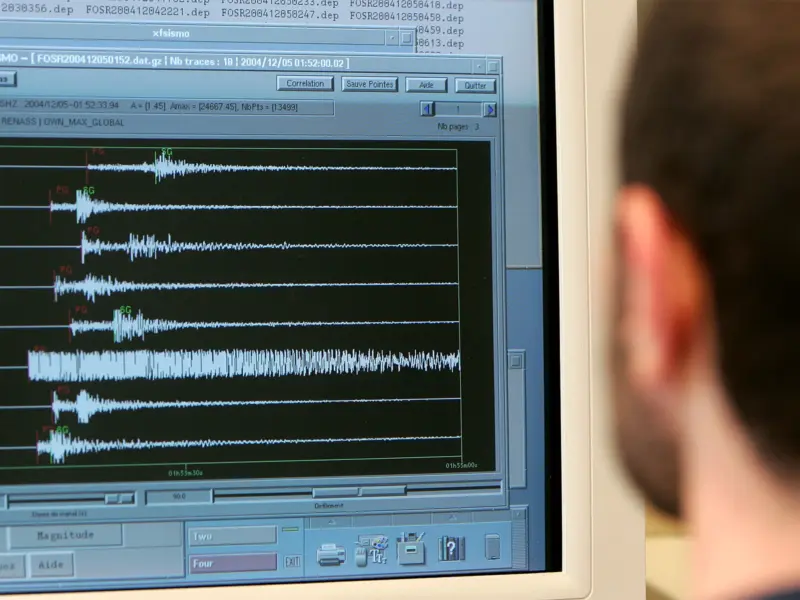

An earthquake measuring magnitude 3.4 struck the Pithoragarh district of Uttarakhand on the morning of April 14, the National Centre for Seismology (NCS) reported.
The seismic event occurred at 07:07:03 IST, with coordinates at a latitude of 30.285 N and longitude of 80.553 E. The earthquake was recorded at a depth of 5 kilometres, according to an NCS post on X.
The NCS stated: “EQ of M: 3.4, On: 14/04/2026 07:07:03 IST, Lat: 30.285 N, Long: 80.553 E, Depth: 5 Km, Location: Pithoragarh, Uttarakhand.”
Tremors were felt in parts of the region, but there have been no immediate reports of damage to property or casualties.
Separately, the NCS also reported an earthquake of magnitude 4.9 that struck the Indian Ocean on Sunday morning, April 12. This quake occurred at a depth of 10 kilometres, with coordinates at latitude 1.806 N and longitude 94.924 E.
The NCS detailed the Indian Ocean event as: “EQ of M: 4.9, On: 12/04/2026 08:10:38 IST, Lat: 1.806 N, Long: 94.924 E, Depth: 10 Km, Location: Indian Ocean.”
Shallow earthquakes, such as those occurring at depths of 0 to 70 kilometres, are generally considered more dangerous than deeper ones because seismic waves have less distance to travel before reaching the surface, resulting in stronger ground shaking and the potential for greater casualties and structural damage.
Earthquakes can happen within a range from the Earth’s surface down to around 700 kilometres. For scientific classification, this range is divided into shallow (0-70 km), intermediate (70-300 km), and deep (300-700 km) zones, as per data from the United States Geological Survey (USGS). Earthquakes deeper than 70 km are referred to as “deep-focus earthquakes.”