




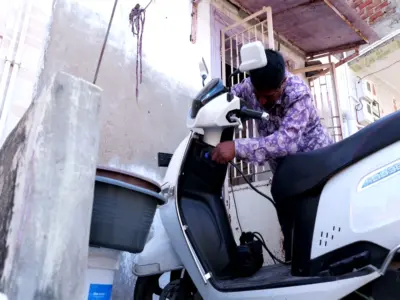

Modhera, recognised as India's first village powered by solar energy 24 hours a day, is advancing its renewable energy initiatives by incorporating electric vehicle (EV) adoption and solar-powered charging infrastructure.
Under the Solar Village Modhera 2.0 project, the village combines renewable energy with daily transportation needs. The scheme features a 6 MW solar power plant and a 15 MWh Battery Energy Storage System (BESS), supporting energy use beyond household consumption.
An EV charging station has been established near the Sun Temple, enabling residents to recharge vehicles with solar-generated electricity. Dilip Kumar, Deputy Engineer at Gujarat Urja Vikas Nigam Limited (GUVNL), stated, "An electric vehicle charging station has also been set up near the Solar Temple, with its power supply coming from the solar ground-mounted power plant. People can use it to charge their vehicles, helping them save on petrol and diesel and reduce carbon emissions. This charging station provides an additional benefit to the community."
Residents who rely on two-wheelers for commuting and small-scale business have begun using electric bikes and scooters, reducing dependence on conventional fuels. Bharatbhai Suthar, a local resident, said, "This will help us save a significant amount of petrol and diesel. With solarisation, we are able to travel several kilometres and carry out various small businesses and daily activities at a lower cost."
Solar power also supports household electricity needs, enabling use of appliances such as televisions, refrigerators, air conditioners and washing machines. Khushi Bharatbhai Patel, another resident, commented, "With the solar system, we are able to run many household appliances such as the refrigerator, TV, AC, household flour mill and washing machine. We benefit greatly from using solar energy for these appliances."
Modhera's integrated approach links solar electricity generation, battery storage and electric vehicle charging, illustrating how renewable energy can meet both domestic and transportation requirements while lowering fuel costs and carbon emissions.
As the village progresses in its solar energy utilisation, the adoption of green mobility provides a model for sustainable transportation in rural settings.