
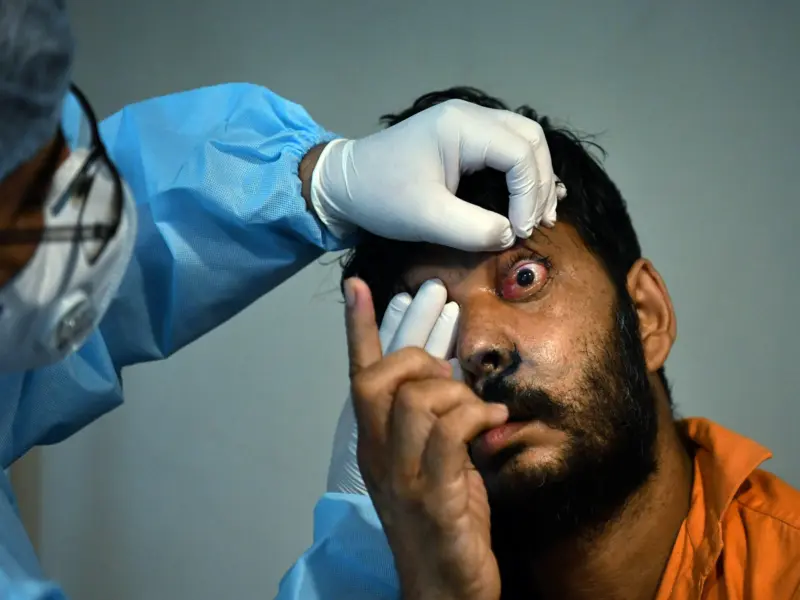

Researchers from the CSIR-Centre for Cellular and Molecular Biology (CSIR-CCMB) and the LV Prasad Eye Institute (LVPEI) have identified significant levels of antimicrobial resistance (AMR) in bacteria responsible for eye infections in India.
The collaborative study, published in Communications Biology, is among the most comprehensive genomic analyses of eye pathogens in the country to date.
Leading the research were Dr Karthik Bharadwaj and Dr Divya Tej Sowpati from CSIR-CCMB, alongside Dr Joveeta Joseph from LVPEI. The CSIR-CCMB team conducted genomic and bioinformatics analyses, while LVPEI investigators provided clinical expertise, patient samples, and microbiological characterisation, combining advanced genomics with clinical insights.
Dr Vinay K Nandicoori, Director of CSIR-CCMB, stated, “To understand and solve a problem like AMR, it is essential for clinicians and scientists to come together and contribute through their expertise. This is not a problem to be solved with model organisms but rather with real patient samples.”
The researchers isolated bacteria from patient samples and evaluated their sensitivity to antibiotics, finding that over 45% of isolates were multidrug-resistant, including both Gram-positive and Gram-negative pathogens. Dr Bharadwaj, clinician-scientist at CSIR-CCMB, commented, “We found samples with vancomycin-resistant Staphylococcus aureus and extensively-drug resistant (XDR)-Klebsiella pneumoniae strains involved in eye infections. These findings are worrying because they can spread their AMR genes to other bacteria, too. Also, these pathogens can infect other parts of our bodies.”
Whole genome sequencing also revealed new AMR-related bacterial mechanisms and mutations.
The study emphasises the urgent need to reassess current treatment strategies. Typically, clinicians begin treatment using empirical therapy-starting antibiotics based on clinical judgement before laboratory results are available and adjusting once results return. However, with a high prevalence of AMR, reliance on empirical antibiotic therapy is challenged. Resistance against fluoroquinolones, a commonly used class of antibiotics, was observed in all eye pathogens studied, highlighting the importance of microbiology-guided diagnosis and treatment, especially in severe infections such as microbial keratitis and endophthalmitis.
Dr Joseph, Head of Microbiology at LVPEI, noted, “While genomic tools are not yet part of routine clinical workflows, the insights generated through this study provide a critical foundation for developing region-specific treatment guidelines and strengthening antimicrobial stewardship efforts in ophthalmology.”
Eye infections arise from microbes on the skin and in the environment, indicating that these findings reflect the broader AMR landscape beyond the eye care sector. Dr Prashant Garg, Executive Chair of LVPEI, said, “This study positions the eye as a valuable site for AMR surveillance in the environment around us.”