




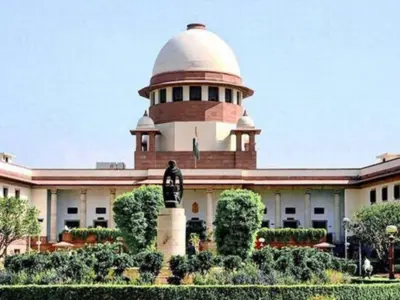

The Supreme Court cancelled the bail of Sonam Raghuvanshi, a principal accused in the alleged murder of her husband Raja Raghuvanshi during their honeymoon in Meghalaya.
The decision, made on Thursday by a bench of Justices MM Sundresh and PB Varale, stated that Sonam's continued release could interfere with the ongoing trial.
The Court set aside the earlier bail orders granted to her and directed her to surrender within two weeks. It added that if the trial is not concluded within six months, she may apply for bail again before the trial court.
“We are inclined to observe that continued enlargement on bail of the respondent at this stage might hinder the ongoing trial. In such a matter, we are inclined to set aside the bail order. The respondent has been given two weeks to surrender. In the event of the trial not concluding within six months, the respondent can submit an application seeking bail,” the Court stated.
The appeal was filed by the Meghalaya government challenging a Meghalaya court's decision to grant Sonam bail after additional charges were introduced following a supplementary chargesheet dated February 10, 2026.
The prosecution stated Sonam had accompanied Raja Raghuvanshi to Meghalaya for their honeymoon, where he was allegedly murdered with the assistance of three accomplices. Following the incident, Sonam went missing, leading to the registration of an FIR. She was arrested on June 9, 2025, after surrendering at Nandganj Police Station in Ghazipur district, Uttar Pradesh, and was produced before the Chief Judicial Magistrate for transit remand.
Before the Supreme Court, prosecutors argued the allegations were serious and noted there was no explanation for Sonam's disappearance after the incident. They submitted she had been supplied with grounds of arrest and related documents on June 9, 2025, and attributed the reference to Section 403(1) in place of Section 103(1) in the grounds of arrest to a typographical error.
Opposing the appeal, Sonam cited the Supreme Court's judgment in Mihir Rajesh Shah v. State of Maharashtra, asserting that proper communication of grounds of arrest is constitutionally required under Article 21 and that she had not received the actual reasons for her arrest.
The Supreme Court rejected this argument, stating the case did not involve complete non-service of grounds of arrest but an issue regarding the adequacy of the reasons provided. “It is not as if she was not served grounds of arrest. There is a difference between non-service of grounds of arrest and giving adequate reasons thereunder. In the second one, one has to see the prejudice. Secondly, such a plea has to be raised at the earliest,” the Court observed.
The Court also noted that Sonam had expressed satisfaction with the reasons for her arrest at the relevant time and therefore did not examine whether the arrest was voluntary or not.
Additionally, the Supreme Court clarified that even if there is non-compliance in furnishing grounds of arrest, the investigating agency can effect a fresh arrest in accordance with the law.
The Court concluded that both lower courts erred in granting bail despite the seriousness of the charges and the fact that earlier bail refusals had attained finality, thus setting aside the bail order.