


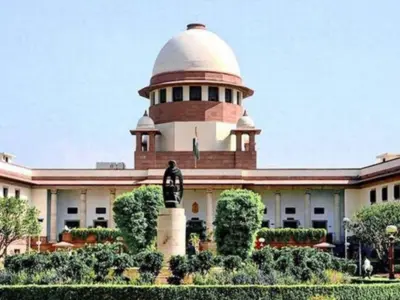

The Supreme Court has ruled that the properties of the former Kapurthala kingdom will be distributed among all family members under Hindu Law, ending the application of the Primogeniture custom that granted inheritance solely to the eldest male heir.
A Division Bench comprising Justice Pankaj Mittal and Justice SVN Bhatti reached the decision on May 28, 2026, closing a succession dispute that had persisted in courts for nearly 50 years. The court set aside prior Delhi High Court judgments dated September 3, 2004, and November 19, 2010, which had upheld the Primogeniture custom for the Kapurthala royal properties.
The dispute concerns valuable movable and immovable properties held by the Kapurthala royal family across India and abroad. In 1977, the eldest son, mother, and daughters filed a suit for partition against the father, who had inherited the estate after Maharaja Paramjit Singh's death in 1955. The father opposed the partition, asserting that the properties were inherited only by the eldest male heir under the Primogeniture custom.
The Supreme Court ruled that all family members have rights to the property, governed by the Hindu Succession Act, 1956. It clarified that following the merger agreement and the notification of certain properties as the Maharaja's personal private assets, only the titular throne devolved under Primogeniture, not the personal properties.
After British paramountcy ended and the merger agreement was signed, the Maharaja's status became nominal. The personal properties declared at the time of the merger devolve according to Hindu succession law. The court partially allowed the appeal and overturned the High Court's order favouring the father under Primogeniture.
Senior Advocate Nikhil Nayyar and Raj Shekhar Rao represented the appellants, instructed by Capital Law Chambers LLP, while Senior Advocates Santosh Paul and Arun Mohan represented the contesting respondent, instructed by Parekh & Co.