
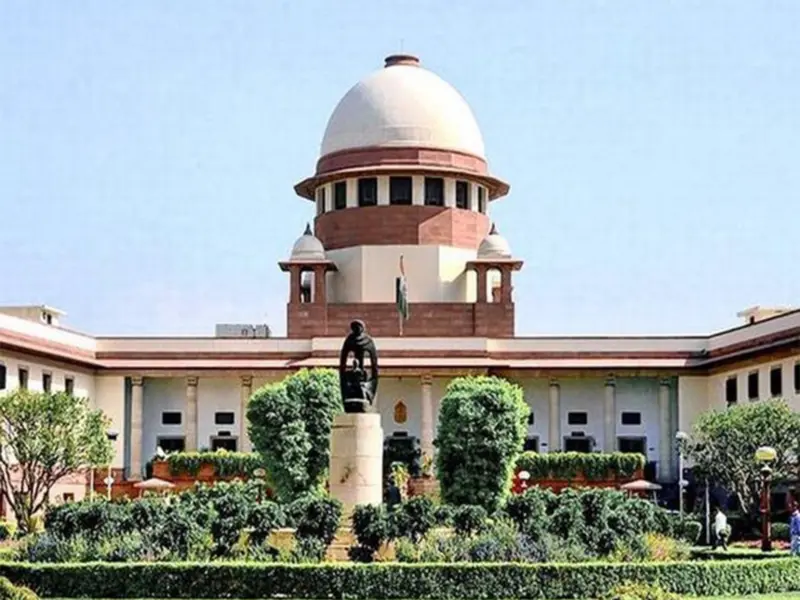

The Supreme Court has instructed the Election Commission of India (ECI) to include the names of voters whose exclusion claims are approved by Appellate Tribunals before polling dates scheduled between April 23 and 29 in supplementary revised electoral rolls.
This move ensures those voters can exercise their voting rights in the West Bengal elections.
The order, initially announced during the hearing on April 13 in the West Bengal Special Intensive Revision (SIR) case, was formally issued today via a detailed directive on the Court’s official website. The bench, led by Chief Justice of India Surya Kant, emphasised that merely having an appeal pending before the Appellate Tribunal does not grant the right to vote.
“Therefore, invoke our powers under Article 142 of the Constitution of India and direct the ECI that, wherever the Appellate Tribunals can decide the appeals by April 21, 2026, or April 27, as the case may be, such appellate orders shall be given effect to by issuing a supplementary revised electoral roll, and all necessary consequences with respect to the right to vote shall follow. However, it goes without saying that the mere pendency of appeals preferred by excluded persons before the Appellate Tribunals shall not entitle them to exercise their right to vote,” the Court stated in its order.
The matter is scheduled for the next hearing on April 24.
During the April 13 hearing, the Court noted that people excluded from the voter list with pending appeals before Appellate Tribunals would be allowed to vote if their names were included after final adjudication. This followed information from counsels representing the West Bengal government that 3.4 million names had been excluded from the voter list.
Justice Joymalya Bagchi stated then, “The Judicial Officers have completed the adjudication by April 9 — even if they had exceeded by 1-2 days, I have permitted them (to adjudicate further claims). There are 153 constituencies — there was some spillover of 7-8 constituencies — those names that were left out would be added to the list for the April 23 elections. Don’t worry — if their names are there, they will be voting.”
Additionally, the Court directed the West Bengal government and the ECI to maintain and enhance security for judicial officers involved in the SIR process. It expressed that concerns about judicial officers’ safety should be resolved decisively rather than treated as routine administrative issues.
The Court also stated it will review issues raised in the NIA’s interim report, aiming for a conclusive resolution.
“We direct the ECl and State Government to ensure that the security already provided to judicial officers is not withdrawn. Security cover shall not be withdrawn without assessing further threat perception. Deployment of forces in terms of order passed on April 2 will consequently continue till further orders,” the Court observed.
Regarding the claims pending in the SIR, the Court cited the Chief Justice of the Calcutta High Court, noting that judicial officers had verified over six million claims, with only 1,822 objections (approximately 0.03%) pending.
The Court acknowledged that a system is in place which includes 19 appellate tribunals overseen by a three-judge committee and a Standard Operating Procedure issued on April 7, 2026, followed by an inspection on April 10, 2026.
The Court commended the judicial officers’ work and expressed confidence that the remaining tasks will be completed shortly.